

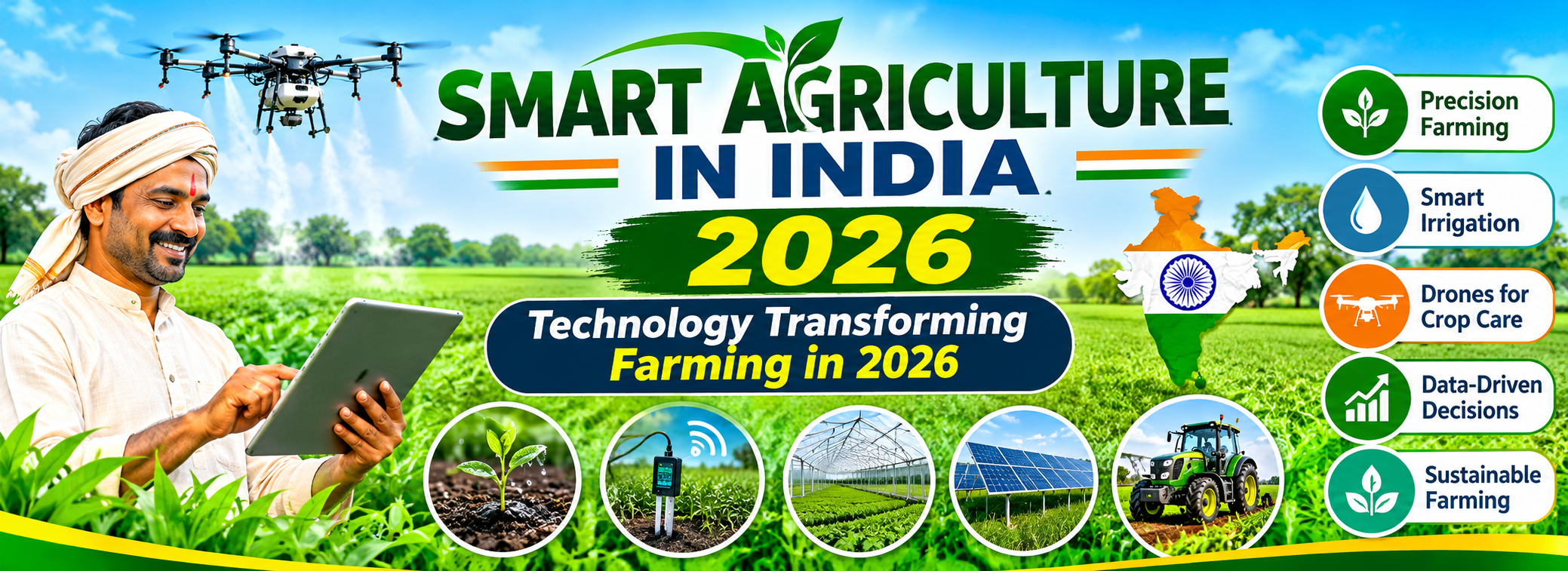
Smart Agriculture in India 2026
November 23, 2026Discover how smart agriculture, precision farming, drip irrigation, drones, organic farming, and digital marketplaces are transforming Indian agriculture in 2026.
What Is Smart Agriculture?
Smart agriculture, also known as precision farming, uses technology, data, and innovative agricultural methods to improve farming operations.
It includes:
Drip irrigation and automated watering systems
Soil testing and nutrient management
Weather forecasting and crop monitoring
Agricultural drones
Smart farming equipment
Digital marketplaces for agricultural products
Modern pest and disease management techniques
1. Precision Farming for Better Crop Production
Precision farming allows farmers to provide crops with the right amount of water, fertilizers, and nutrients at the right time.
By understanding soil conditions, moisture levels, and crop requirements, farmers can avoid unnecessary input expenses and improve agricultural productivity.
Soil testing is one of the most important steps in precision agriculture because it helps identify nutrient deficiencies and supports balanced fertilizer application.
2. Drip Irrigation and Water Conservation
Water management plays a crucial role in agriculture, particularly in regions facing irregular rainfall and groundwater shortages.
Drip irrigation delivers water directly to the root zone of plants, reducing water wastage and improving irrigation efficiency.
Benefits include:
Reduced water consumption
Better nutrient absorption
Improved crop growth
Reduced weed growth
Efficient use of fertilizers through fertigation
Farmers growing vegetables, fruits, flowers, and commercial crops can benefit significantly from efficient irrigation systems.
3. Agricultural Drones and Modern Crop Monitoring
Agricultural drones are helping farmers monitor large fields quickly and efficiently.
They can assist with crop monitoring, identifying crop stress, observing field conditions, and targeted spraying where appropriate.
Drone technology can help farmers identify potential problems earlier and make informed decisions regarding crop management.
4. Organic Farming and Sustainable Agriculture
Organic farming is gaining attention as consumers become more conscious about food quality and sustainable agricultural practices.
Farmers are adopting practices such as:
Organic manure and compost
Vermicomposting
Biofertilizers
Biopesticides
Crop rotation
Natural pest management
Sustainable farming practices help improve soil health, support beneficial microorganisms, and maintain long-term agricultural productivity.
5. Digital Agriculture Marketplaces
One of the biggest challenges farmers face is finding quality agricultural inputs and reliable buyers for their produce.
Digital agricultural marketplaces are helping bridge this gap by making agricultural products and information more accessible.
Online agriculture platforms can help farmers discover:
Seeds and planting materials
Fertilizers and crop nutrition products
Agricultural machinery
Organic farming products
Farming information and guidance
Agricultural business opportunities
6. Climate-Smart Farming
Climate change is affecting rainfall patterns, temperature levels, crop seasons, and agricultural productivity.
Climate-smart agriculture focuses on improving resilience through:
Drought-resistant crop varieties
Efficient irrigation
Crop diversification
Weather-based farming decisions
Improved soil health
Sustainable agricultural practices
Adopting climate-smart methods can help farmers reduce risks and protect their crops against unpredictable weather conditions.
Benefits of Smart Agriculture
Modern agricultural practices can help farmers achieve:
Higher productivity
Better crop quality
Reduced input wastage
Improved water management
Lower operational costs
Better soil health
The Future of Indian Agriculture
The future of Indian agriculture lies in combining traditional farming experience with modern technology and sustainable practices.
Digital marketplaces, precision agriculture, organic farming, advanced irrigation, and better agricultural information will continue to create new opportunities for farmers and agribusinesses.
Conclusion
Smart agriculture is transforming the way farming is carried out in India. From water-saving irrigation systems to digital agricultural marketplaces, modern solutions are helping farmers make better decisions and improve resource efficiency.
Sustainable farming and technology-driven agriculture will play an important role in building a productive, resilient, and profitable agricultural future.
Explore agricultural products, farming solutions, and agriculture-related resources at KrishiBazaar.in — your destination for smarter agriculture.


Guest reviews
No reviews found for this Blog