

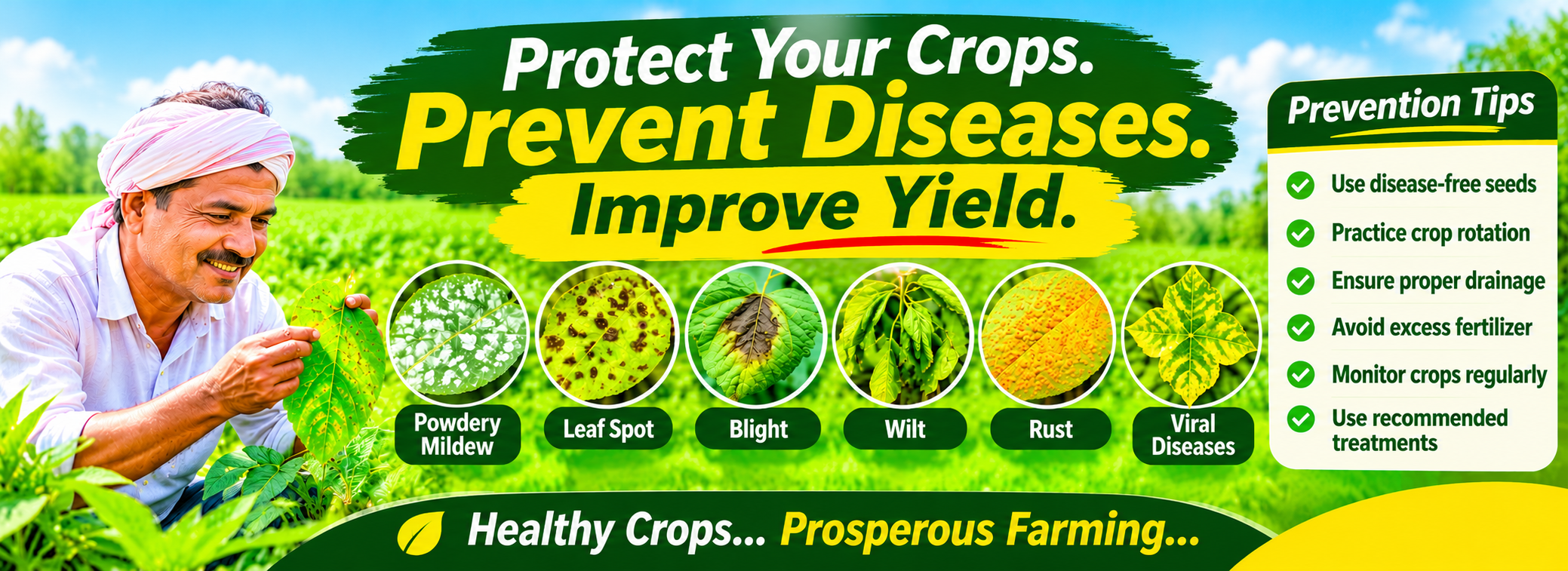
Common Crop Diseases and Their Prevention
November 20, 2026Learn about common crop diseases such as blight, wilt, rust, leaf spot, and powdery mildew. Discover symptoms, prevention methods, and crop protection tips.
Common Crop Diseases and Their Prevention: A Complete Guide for Farmers
Crop diseases are one of the major challenges faced by farmers across India. Fungal, bacterial, and viral infections can damage crops, reduce yields, affect product quality, and cause significant financial losses. Identifying diseases early and following proper prevention methods can help farmers protect their crops and improve productivity.
In this guide, we explore common crop diseases, their symptoms, and effective prevention methods.
1. Powdery Mildew
Powdery mildew is a fungal disease commonly affecting vegetables, fruits, and other crops. It appears as white or grey powder-like patches on leaves and stems.
Symptoms:
White powdery coating on leaves.
Yellowing and curling of leaves.
Reduced plant growth.
Prevention: Maintain proper spacing between plants, avoid excessive nitrogen application, and ensure good air circulation. Use suitable fungicides when required.
2. Leaf Spot Disease
Leaf spot diseases are caused by different fungi and bacteria. They commonly affect crops such as tomatoes, groundnuts, cotton, and vegetables.
Symptoms:
Brown, black, or yellow spots on leaves.
Premature leaf dropping.
Reduced photosynthesis and crop growth.
Prevention: Use disease-free seeds, avoid unnecessary overhead irrigation, remove infected plant debris, and follow crop rotation practices.
3. Blight Disease
Blight can rapidly damage crops such as potatoes, tomatoes, and rice. It may spread quickly under favorable environmental conditions.
Symptoms:
Dark or water-soaked patches on leaves.
Rapid drying of foliage.
Damage to stems, fruits, or tubers
Prevention: Select resistant varieties, monitor crops regularly, maintain proper drainage, and use recommended disease-management products according to crop requirements.
4. Wilt Disease
Wilt diseases affect crops such as tomatoes, cotton, chilli, and pulses. Some pathogens attack roots and block water movement within plants.
Symptoms:
Drooping leaves despite sufficient moisture.
Yellowing of foliage.
Drying and death of plants.
Prevention: Practice crop rotation, use healthy planting materials, avoid waterlogging, and select varieties resistant to wilt diseases.
5. Rust Disease
Rust is a fungal disease affecting wheat, beans, and several other crops. It can reduce the plant's ability to produce food through photosynthesis.
Symptoms:
Orange, brown, or reddish pustules on leaves.
Yellowing of foliage.
Reduced grain formation and crop yield.
Prevention: Grow resistant varieties, inspect crops regularly, and follow recommended fungicide management when necessary.
6. Viral Diseases
Viral diseases are often spread by insects such as aphids, whiteflies, and thrips. They commonly affect chilli, tomato, papaya, cotton, and other crops.
Symptoms:
Mosaic patterns on leaves.
Leaf curling and distortion.
Stunted growth and reduced fruit production.
Prevention: Use healthy seedlings, remove infected plants, control insect vectors through integrated pest management, and maintain weed-free fields.
Best Practices to Prevent Crop Diseases
Farmers can reduce disease risk by following these practices:
Use certified, disease-free seeds and seedlings.
Follow crop rotation and recommended planting schedules.
Maintain proper plant spacing and field drainage.
Avoid excessive irrigation and fertilizer application.
Regularly inspect crops for early symptoms.
Remove infected plant parts when appropriate.
Use biological and chemical treatments responsibly.
Follow pesticide labels and local agricultural recommendations.
Conclusion
Crop diseases can significantly affect agricultural productivity, but timely identification and preventive management can reduce losses. Healthy seeds, balanced nutrition, proper irrigation, crop rotation, and regular monitoring are essential for successful farming.
For more farming tips, crop protection advice, and agricultural updates, visit KrishiBazaar.in – your trusted partner in agriculture.

Guest reviews
No reviews found for this Blog