

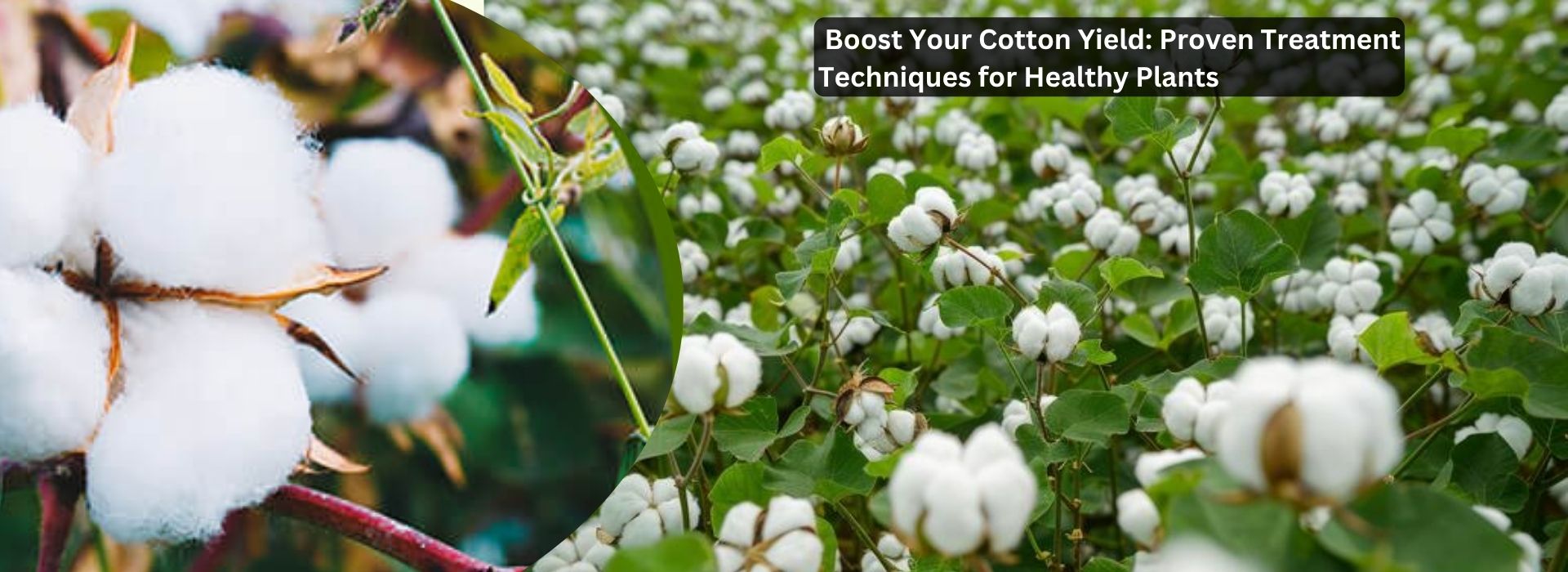
Boost Your Cotton Yield: Proven Treatment Techniques for Healthy Plants
July 8, 2025Boost
Your Cotton Yield: Proven Treatment Techniques for Healthy Plants
Cotton is one of the most important cash crops in the
world—and especially in India, where it sustains the livelihoods of millions of
farmers. But getting a high-yield, healthy cotton crop isn’t just about
sowing the right seeds. It requires the right treatments at the right time—from
land preparation to pest control.
In this blog, we’ll explore proven treatment techniques
that can help boost your cotton yield, protect your plants from common threats,
and improve overall profitability.
🌱 1. Seed Selection and Treatment
High yield starts with high-quality seeds.
✅ Choose the Right Variety:
- Go
for Bt cotton hybrids suited to your agro-climatic zone.
- Opt
for certified seeds to ensure germination and resistance.
🧪 Seed Treatment:
- Treat
seeds with fungicides (Carbendazim or Thiram) to prevent seed and
soil-borne diseases.
- Use biofertilizers
like Azotobacter or Phosphobacteria to enhance root
development and early growth.
🚜 2. Soil Preparation and Basal
Nutrition
Healthy plants need a strong foundation—and that
starts with the soil.
🌾 Soil Testing:
- Conduct
a soil test before sowing to understand pH and nutrient levels.
🧂 Basal Dose Application:
- Apply
well-decomposed FYM or compost (5–10 tons/acre).
- Use balanced
NPK fertilizers as per soil test results (e.g., 40:20:20 kg/acre).
- Apply
zinc sulfate if micronutrient deficiency is identified.
🌿 3. Weed Management
Weeds compete with cotton plants for water, nutrients, and
sunlight.
🌱 Pre-emergence:
- Apply
Pendimethalin 1–2 days after sowing to control early weed
emergence.
🌾 Post-emergence:
- Use glyphosate
carefully between rows, or go for manual hoeing at 20–25 days.
🐛 4. Pest and Disease Control
Cotton is highly vulnerable to pests like bollworms,
whiteflies, aphids, and jassids.
🐞 Integrated Pest
Management (IPM):
- Install
yellow sticky traps to monitor sucking pests.
- Release
natural predators like Trichogramma for bollworm control.
- Spray
neem oil (5%) or biopesticides early in the crop cycle.
🧪 Chemical Control:
- For
whiteflies and jassids: Use Imidacloprid or Acetamiprid.
- For
bollworms: Use Spinosad, Flubendiamide, or newer molecules as per
resistance.
⚠️ Important: Always
rotate chemicals to avoid pest resistance and follow recommended dosages.
💧 5. Water and Irrigation Management
Cotton is a moderately water-sensitive crop,
especially during flowering and boll formation.
Tips:
- Use drip
irrigation to reduce water waste and promote consistent moisture.
- Avoid
waterlogging during early stages; it can damage roots and promote disease.
🧪 6. Foliar Nutrition and Plant Growth
Regulators
To give your plants an extra boost:
🌿 Foliar Sprays:
- 19:19:19
NPK or 13:40:13 during flowering improves boll setting.
- Micronutrient
mix with zinc, boron, and magnesium enhances plant health.
🌸 Growth Regulators:
- Mepiquat
chloride (Pix) can be sprayed to control excessive vegetative growth
and improve boll retention.
🚨 7. Timely Harvesting and
Post-Treatment
Delaying harvest can result in boll damage and quality
loss.
Harvesting Tips:
- Pick
cotton only when fully mature.
- Dry
properly before storing to avoid fungal contamination.
- Use
bio-fungicides for post-harvest treatment if needed.
🌟 Final Thoughts
Maximizing cotton yield is not a one-time activity—it’s a continuous
cycle of care, monitoring, and timely treatment. Whether it’s choosing the
right seed, keeping weeds in check, managing pests, or feeding your crop with
the right nutrients, each step plays a vital role in productivity.
By following these proven treatment techniques, you can not
only boost your cotton yield but also reduce input costs and increase long-term
sustainability.
📌 Tags:
#CottonFarming #CropTreatment #IPM #PestControl #FertilizerManagement
#WaterManagement #SustainableFarming
Would you like a downloadable cotton treatment schedule
or a custom visual guide to go with this blog?
At krishibazaar.in, you
can find and buy various agricultural products. For agricultural guidance on
selecting the most suitable products for your crops, please contact or WhatsApp
at +917887880887.



Guest reviews
No reviews found for this Blog