

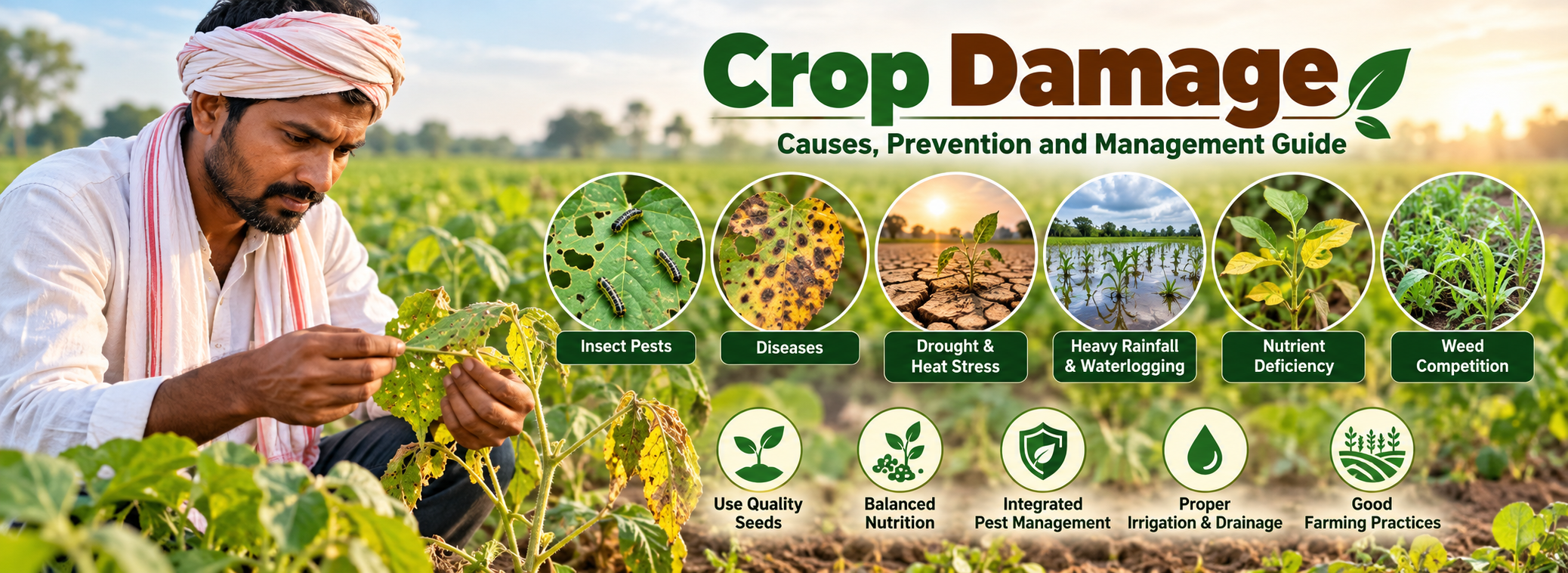
Crop Damage: Causes, Prevention & Management Guide
October 12, 2026Learn the common causes of crop damage, identify pest and disease symptoms, and discover practical prevention and crop Damage management methods.
What Are the Main Causes of Crop Damage?
What Are the Main Causes of Crop Damage?
1. Insect Pests
Insect pests can damage leaves, stems, roots, flowers and fruits. Common examples include aphids, whiteflies, thrips, caterpillars, stem borers and fruit flies.
Common symptoms:
Holes or irregular feeding marks on leaves
Yellowing, curling or distorted leaves
Crop Damaged stems, shoots or roots
Injured fruits and flowers
Sticky deposits or visible insects on plants
Management: Inspect crops regularly, identify the pest correctly, remove heavily infested plant material when appropriate, and use integrated pest management practices. Choose a registered crop protection product only when necessary and follow its label instructions.
Holes or irregular feeding marks on leaves
Yellowing, curling or distorted leaves
Crop Damaged stems, shoots or roots
Injured fruits and flowers
Sticky deposits or visible insects on plants
2. Fungal, Bacterial and Viral Diseases
Plant diseases can spread through infected seeds, soil, water, insects, crop residues or contaminated tools, depending on the pathogen.
Common examples include leaf spots, powdery mildew, wilts, blights, rots and viral leaf-curl symptoms.
Common symptoms:
Brown, black or yellow spots on leaves
White or powdery growth on plant surfaces
Wilting despite adequate soil moisture
Rotting roots, stems or fruits
Unusual leaf curling, mottling or stunted growth
Management: Use healthy planting material, improve field sanitation, manage irrigation and humidity appropriately, and rotate crops where suitable. Confirm the likely disease before selecting a fungicide or other treatment because not all plant diseases are fungal.
Brown, black or yellow spots on leaves
White or powdery growth on plant surfaces
Wilting despite adequate soil moisture
Rotting roots, stems or fruits
Unusual leaf curling, mottling or stunted growth
3. Heavy Rainfall, Flooding and Waterlogging
Excessive rainfall can damage crops by flooding fields, washing away topsoil, restricting oxygen around roots and encouraging certain plant diseases.
Common symptoms:
Standing water around plants
Yellowing and wilting
Root damage and stunted growth
Soil erosion or exposed roots
Increased incidence of some plant diseases
Management: Maintain suitable field drainage, avoid unnecessary irrigation after rainfall, assess root and soil conditions, and follow local agricultural guidance before applying fertilizers to waterlogged crops.
Standing water around plants
Yellowing and wilting
Root damage and stunted growth
Soil erosion or exposed roots
Increased incidence of some plant diseases
4. Drought and Heat Stress
Insufficient rainfall, high temperatures and limited irrigation can cause water stress and interfere with crop development.
Common symptoms:
Leaf rolling or wilting
Dry leaf margins
Flower or fruit drop
Slow growth and premature drying
Poor grain filling or reduced fruit development
Management: Use irrigation efficiently, conserve soil moisture through suitable mulching and soil-management practices, and select crop varieties adapted to local climatic conditions. Follow local agricultural recommendations when planning sowing dates and irrigation schedules.
Leaf rolling or wilting
Dry leaf margins
Flower or fruit drop
Slow growth and premature drying
Poor grain filling or reduced fruit development
5. Nutrient Deficiencies and Imbalances
Plants require balanced nutrition for healthy root development, leaf growth, flowering and fruit development. Both nutrient deficiencies and excessive fertilizer application can damage crops.
Common symptoms:
Yellowing between leaf veins or across leaves
Purple, reddish or brown leaf discoloration
Weak stems and slow growth
Poor flowering or fruit development
Leaf-tip burn or root injury
Management: Assess soil conditions and crop symptoms before choosing a fertilizer. Soil testing, suitable crop-stage nutrition and correct fertilizer application rates help avoid unnecessary inputs and nutrient imbalances.
Yellowing between leaf veins or across leaves
Purple, reddish or brown leaf discoloration
Weak stems and slow growth
Poor flowering or fruit development
Leaf-tip burn or root injury
6. Weed Competition
Weeds compete with crops for water, sunlight, nutrients and growing space. Some weeds can also serve as hosts for crop pests.
Common symptoms and effects:
Slow crop growth
Reduced access to sunlight
Increased competition for soil moisture
Difficulty harvesting
Poor crop establishment
Management: Use timely mechanical weeding, suitable mulching, crop rotation and other integrated weed management practices. Select herbicides only for the appropriate crop, weed species and growth stage, following the product label.
Slow crop growth
Reduced access to sunlight
Increased competition for soil moisture
Difficulty harvesting
Poor crop establishment

Guest reviews
No reviews found for this Blog