

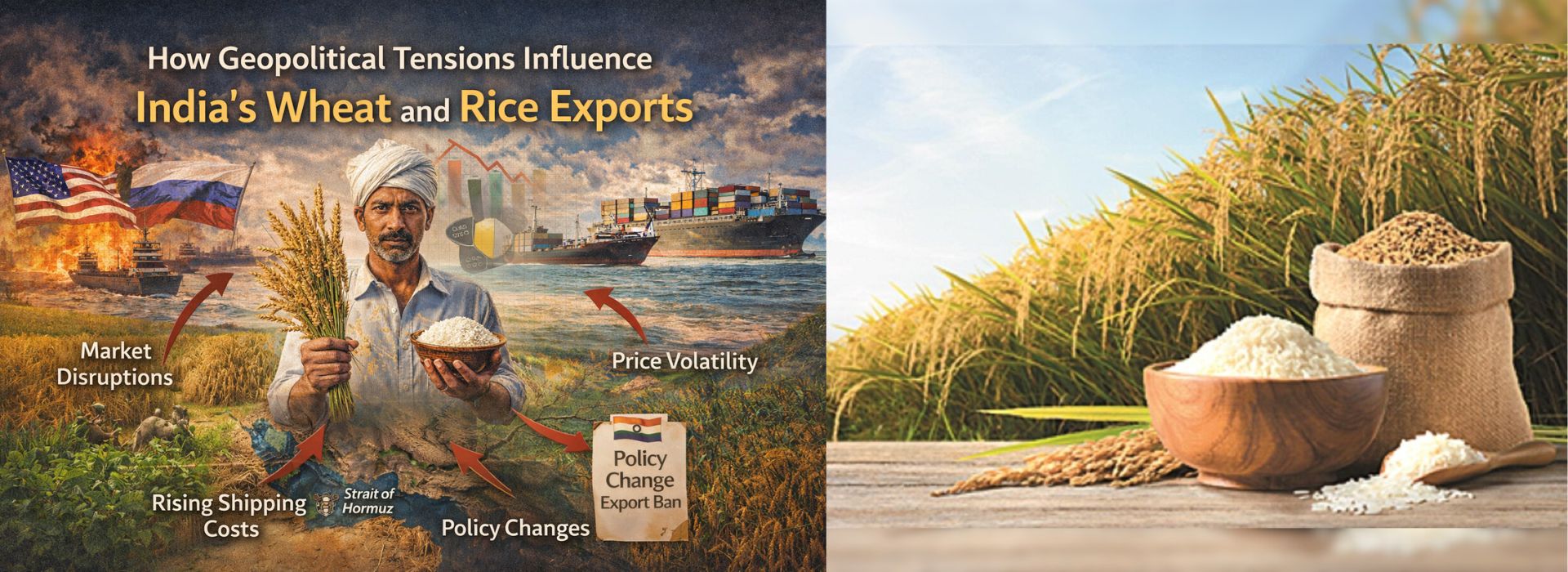
How Geopolitical Tensions Influence India's Wheat and Rice Exports
March 25, 2026🌾 How Geopolitical Tensions Influence India's Wheat and Rice
Exports
Understanding Global Risks and Opportunities for Indian
Agriculture
🌍 Introduction
India is one of the world’s largest producers and exporters
of rice and wheat, playing a critical role in global food security.
However, geopolitical tensions—especially conflicts in regions like the Middle
East—are increasingly affecting agricultural trade.
From rising shipping costs to disrupted export markets, these
global events are reshaping how India exports its staple crops.
🌾 India’s Importance in Global Grain Trade
- India
contributes over 40% of global rice exports
- It
is the second-largest wheat producer globally
- Major
export destinations include:
- Middle
East (Iran, Saudi Arabia, UAE)
- Africa
- South
Asia
These regions are highly sensitive to geopolitical
instability, making India’s exports vulnerable.
⚡ Key Ways Geopolitical Tensions Impact Wheat & Rice Exports
1. Disruption of Key Export Markets
The Middle East is one of the biggest buyers of Indian rice,
especially basmati.
- Around
50% of basmati exports go to Middle Eastern countries
- Conflicts
in this region can:
- Reduce
demand
- Delay
payments
- Halt
trade agreements
Recent disruptions have even led to halted shipments and
stranded consignments in some regions .
2. Shipping Route Risks (Strait of Hormuz Effect)
A major portion of India’s exports passes through the Strait
of Hormuz, a critical global trade route.
- Conflicts
can block or delay shipments
- Freight
and insurance costs increase significantly
This has already caused slower rice export deals due to
higher logistics costs .
3. Rising Freight & Insurance Costs
War-like situations increase:
- Shipping
charges
- Marine
insurance premiums
- Risk
of cargo delays
As a result:
- Exporters
struggle to finalize deals
- Buyers
wait for stability
This leads to reduced export volumes in the short term.
4. Price Volatility in Global Markets
Geopolitical tensions create uncertainty in global food
markets:
- Prices
may rise due to supply shortages
- Or
fall locally due to excess stock
For example:
- Rice
mills in India have faced excess stock and falling prices due to export
disruption
5. Government Policy Interventions
To protect domestic food security, the government may:
- Restrict
exports (as seen earlier with wheat bans)
- Adjust
minimum export prices
- Control
stock limits
These policy decisions directly impact export volumes and
farmer income.
6. Competition from Other Exporting Countries
When India faces export disruptions:
- Countries
like Thailand, Vietnam, and Pakistan may capture market share
- Long-term
trade relationships may shift
This can reduce India’s global dominance if instability
continues.
7. Currency Fluctuations & Trade Barriers
Geopolitical tensions also affect:
- Currency
exchange rates
- Trade
agreements
- Payment
systems
This creates uncertainty for exporters and importers.
🌾 Impact on Indian Farmers
📉 Negative Effects
- Lower
farm-gate prices due to reduced exports
- Delayed
payments from exporters
- Reduced
procurement in some regions
📈 Positive Opportunities
- Higher
global prices during shortages
- New
markets opening in Africa and Asia
- Increased
domestic demand support
🌱 Long-Term Opportunities for India
Despite challenges, India can benefit by:
✅ Diversifying Export Markets
Reducing dependence on the Middle East and expanding into
Africa, Europe, and Southeast Asia.
✅ Strengthening Logistics Infrastructure
Improving ports, storage, and cold chain systems.
✅ Promoting Value-Added Products
Exporting processed rice and branded products for higher
profits.
✅ Building Strategic Trade Partnerships
Developing stable agreements with multiple countries.
📊 Conclusion
Geopolitical tensions are becoming a major factor influencing
India’s wheat and rice exports. While disruptions in shipping, rising costs,
and unstable markets pose challenges, they also create opportunities for
diversification and growth.
For Indian agriculture, the key lies in adaptability, policy support, and strategic market expansion. Farmers, exporters, and policymakers must work together to reduce risks and ensure India continues to lead in global grain trade.
At krishibazaar.in, you can find and buy various agricultural products. For agricultural guidance on selecting the most suitable products for your crops, please contact or WhatsApp at +917887880887.


Guest reviews
No reviews found for this Blog