

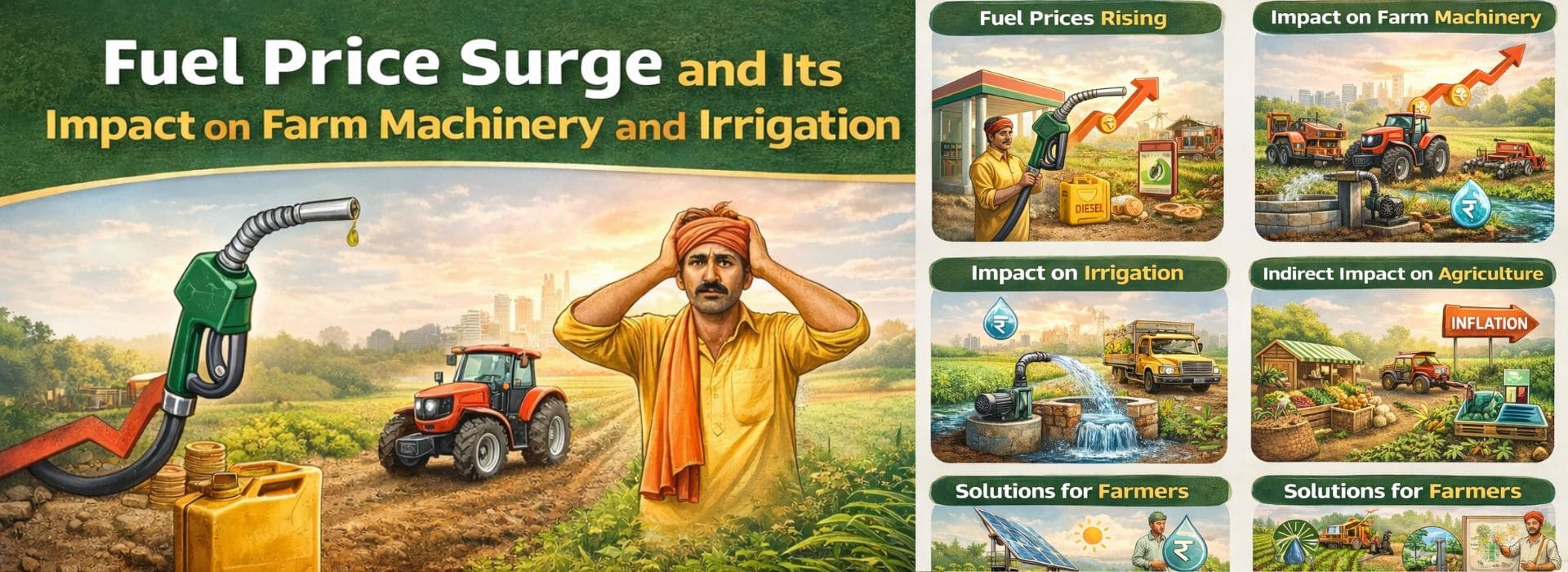
Fuel Price Surge and Its Impact on Farm Machinery and Irrigation
April 1, 2026⛽ Fuel Price Surge and Its Impact on Farm Machinery and Irrigation
🌍
Introduction
Fuel
prices—especially diesel—play a critical role in modern agriculture. From
running tractors to powering irrigation pumps, fuel is a backbone of farm
operations. However, recent global tensions and supply disruptions have led to
a sharp rise in fuel prices, directly affecting Indian farmers.
As
India imports nearly 80–87% of its crude oil, fluctuations in global
markets quickly impact domestic fuel costs.
⚡ Why Fuel
Prices Are Rising
Recent
geopolitical conflicts and supply disruptions have pushed global crude oil
prices higher.
- Fuel prices
in India have already seen increases of up to ₹5 per litre due to
global tensions.
- Government
interventions like tax cuts are being used to control inflation.
These
changes directly affect agriculture, which is highly dependent on diesel.
🚜
Impact on Farm Machinery
1.
Increased Cost of Tractor Operations
Diesel
powers most farm machinery:
- Tractors
- Harvesters
- Threshers
When
fuel prices rise:
- Cost per
acre of ploughing increases
- Hiring
machinery becomes more expensive
👉 This raises
overall cost of cultivation, reducing farmer profit margins.
2.
Reduced Use of Mechanization
Small
farmers may:
- Delay
operations like ploughing or harvesting
- Shift back
to manual labour
This
can:
- Reduce
efficiency
- Delay crop
cycles
3.
Higher Maintenance and Rental Charges
Custom
hiring centers and tractor owners:
- Increase
rental rates
- Pass fuel
costs to farmers
This
affects even those farmers who don’t own machinery.
💧
Impact on Irrigation
1.
Rising Cost of Diesel Pumps
Diesel
pumps are widely used in rural India:
- Higher fuel
cost = higher irrigation expense
- Farmers may
reduce irrigation frequency
👉 This can
directly affect crop yield.
2.
Increased Cost of Water Extraction
Groundwater
irrigation becomes more expensive:
- Borewell
operation cost rises
- Energy cost
per hour increases
3.
Impact on Water-Intensive Crops
Crops
like:
- Sugarcane
- Paddy
become
more expensive to grow due to:
- Frequent
irrigation needs
- Higher
pumping costs
📦
Indirect Impacts on Agriculture
1.
Transportation Costs Rise
Fuel
price hikes increase:
- Cost of
transporting crops to market
- Cost of
fertilizers and inputs
👉 This leads
to higher market prices and reduced farmer margins.
2.
Fertilizer Prices Also Affected
Fuel
and natural gas are key inputs in fertilizer production:
- Rising
energy costs increase fertilizer prices
- Government
subsidies increase burden on economy
3.
Food Inflation
Higher
fuel costs lead to:
- Increased
production cost
- Higher food
prices
👉 Fuel
inflation is directly linked to food inflation in India.
🌱
Solutions & Alternatives for Farmers
✅ 1. Solar
Pumps (Best Alternative)
Government
schemes like PM-KUSUM promote solar irrigation:
- Reduce
diesel dependency
- Lower
long-term costs
✅ 2. Drip
Irrigation & Water Efficiency
- Saves water
and energy
- Reduces
pumping frequency
- Subsidies
available up to 80%
✅ 3. Use of
Electric Pumps
Where
electricity is available:
- Lower
operational cost compared to diesel
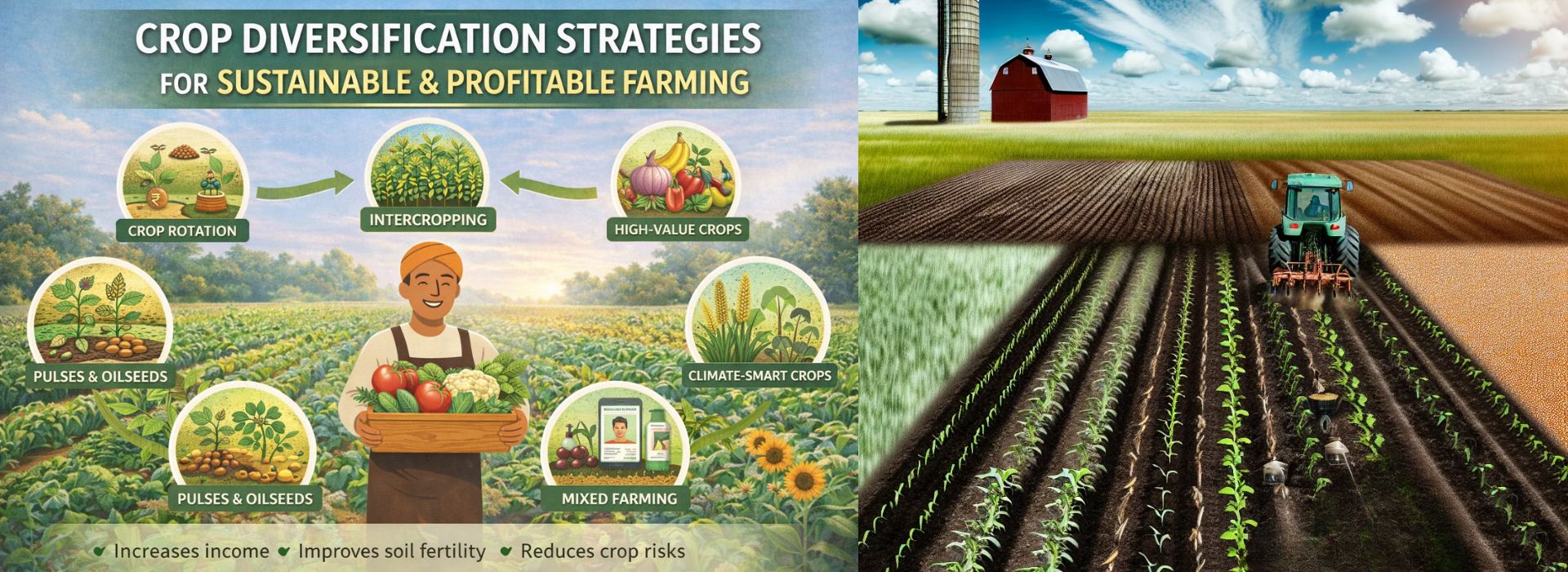
✅ 4. Crop
Planning
Farmers
can shift to:
- Less
water-intensive crops
- Short-duration
varieties
✅ 5. Shared
Machinery (Custom Hiring)
- Reduces
individual fuel burden
- Improves
cost efficiency
📊
Conclusion
Fuel
price surge is one of the biggest challenges facing Indian agriculture today.
It directly impacts farm machinery, irrigation, transportation, and overall
cost of cultivation.
However, with the adoption of solar energy, efficient irrigation systems, and better planning, farmers can reduce dependence on diesel and protect their income.

Guest reviews
No reviews found for this Blog

Sagar
Text