

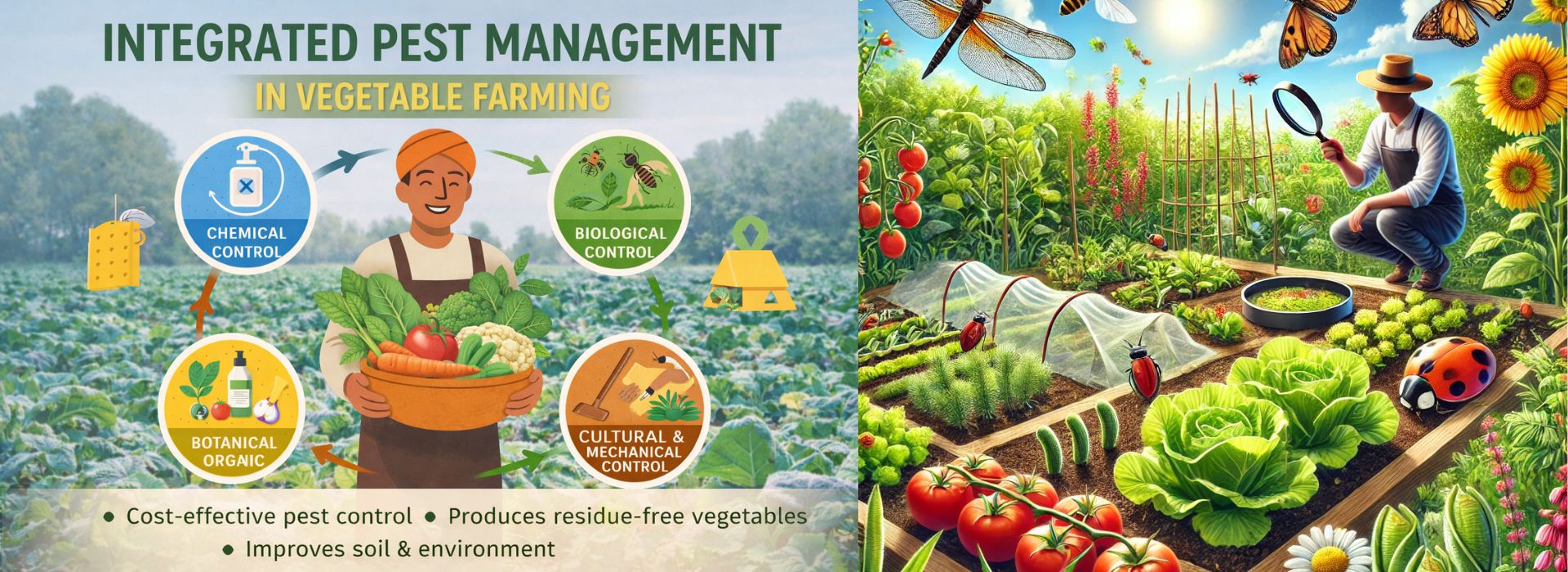
Integrated Pest Management in Vegetable Farming
December 23, 2025Integrated Pest Management in Vegetable Farming
Vegetable farming is highly profitable but also highly
vulnerable to pests and diseases. Excessive use of chemical pesticides
increases production costs, damages soil health, kills beneficial insects, and
creates pesticide resistance.
Integrated Pest Management (IPM) offers a smart, eco-friendly, and
cost-effective solution. IPM combines cultural, biological, mechanical, and
chemical methods to control pests while protecting crops, farmers,
consumers, and the environment.
🌱 What Is Integrated Pest Management (IPM)?
Integrated Pest Management is a scientific approach to
pest control that focuses on prevention first, not just chemical
treatment. Pesticides are used only when necessary and in the right
quantity at the right time.
🎯 Main Goals of IPM
- Reduce
pest population below economic damage level
- Minimize
pesticide use
- Protect
beneficial insects
- Reduce
input costs
- Produce
safe, residue-free vegetables
🌾 Why IPM Is Important in Vegetable Farming
Vegetable crops are often sprayed frequently, leading to:
- High
pesticide residues
- Pest
resistance
- Increased
cost of cultivation
- Environmental
pollution
IPM helps farmers achieve healthy crops, better yields,
and higher profits with fewer risks.
🧑🌾 Key Components of IPM in Vegetable Farming
1️⃣ Cultural Control (Prevention First)
These practices reduce pest buildup naturally:
- Crop
rotation
- Use
of pest-resistant varieties
- Timely
sowing and proper spacing
- Removal
of crop residues
- Balanced
fertilizer use (avoid excess nitrogen)
2️⃣ Mechanical & Physical Control
Simple, low-cost methods to control pests:
- Hand-picking
of larvae and egg masses
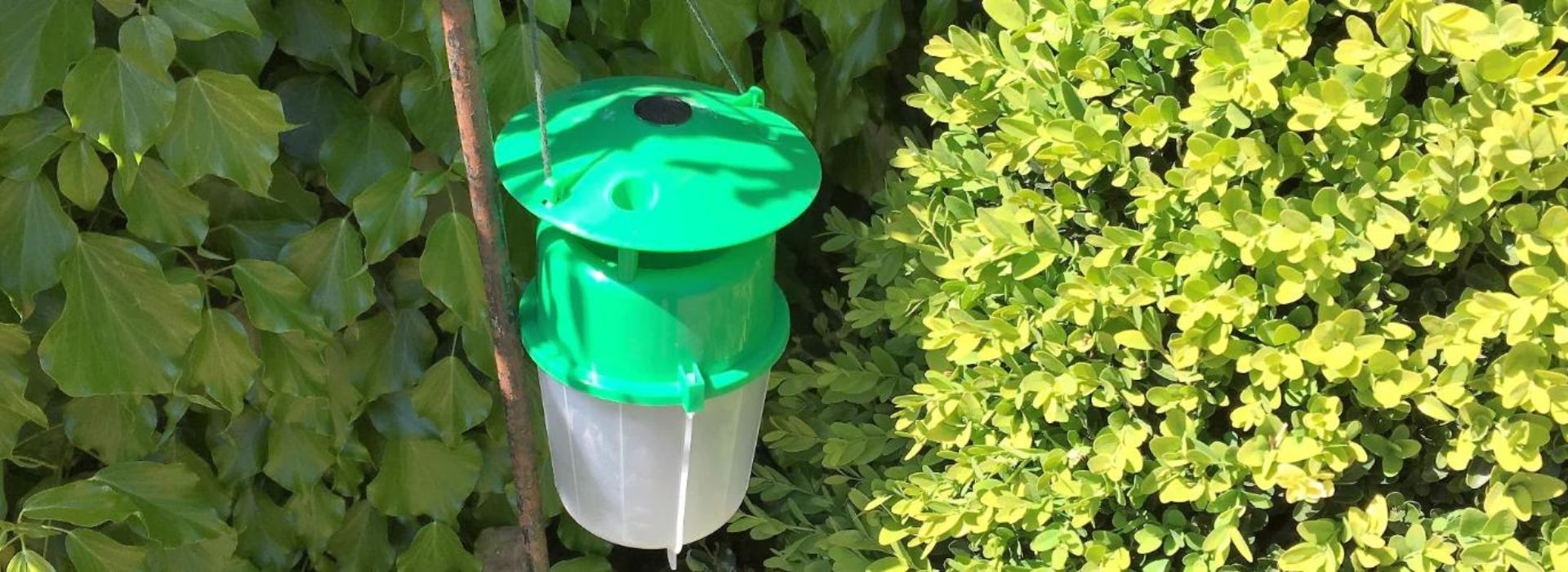
- Use
of light traps and pheromone traps
- Yellow
sticky traps for aphids and whiteflies
- Netting
and row covers
3️⃣ Biological Control (Nature’s
Helpers)
Encouraging natural enemies keeps pests under control:
- Trichogramma (parasitoid wasps)
- Ladybird
beetles
(control aphids)
- Chrysoperla (lacewings)
- Predatory
spiders and birds
Use bio-pesticides such as:
- Neem
oil
- Bacillus
thuringiensis (Bt)
- Trichoderma
- Beauveria
bassiana
4️⃣ Botanical & Organic Solutions
Natural plant-based pesticides include:
- Neem
oil (3–5 ml/litre)
- Neem
seed kernel extract (NSKE)
- Dashparni
Ark
- Garlic–chilli
extract
These are safe, eco-friendly, and effective when applied
early.
5️⃣ Chemical Control (Last Option Only)
Chemicals should be used only when pest population crosses
Economic Threshold Level (ETL).
Safe Use Guidelines:
- Select
crop-specific pesticides
- Rotate
chemicals to avoid resistance
- Use
recommended dose only
- Follow
waiting period before harvest
Avoid spraying during flowering to protect pollinators.
🐛 Common Vegetable Pests & IPM Solutions
|
Pest |
Crop |
IPM Practice |
|
Aphids |
Cabbage, Brinjal |
Neem oil, yellow traps |
|
Fruit borer |
Tomato, Okra |
Pheromone traps, Bt |
|
Whitefly |
Chilli, Tomato |
Sticky traps, bio-pesticides |
|
Leaf miner |
Beans |
Remove infested leaves |
|
Thrips |
Onion, Chilli |
Neem-based sprays |
💰 Benefits of IPM for Farmers
- Lower
pesticide cost
- Reduced
crop damage
- Higher
market value due to safe produce
- Improved
soil and environmental health
- Sustainable
long-term farming
🌟 Tips for Successful IPM Adoption
- Regular
field monitoring
- Correct
pest identification
- Early-stage
intervention
- Combine
multiple control methods
- Avoid
unnecessary spraying
✅ Conclusion
Integrated Pest Management is not just a pest control
method—it is a smart farming strategy. By combining traditional
knowledge with modern science, IPM helps vegetable farmers produce healthy,
high-quality vegetables at lower cost while protecting the environment.
Adopting IPM ensures profitable farming today and
sustainable agriculture for tomorrow.
🔖 Tags: #IPM #VegetableFarming #PestManagement #SustainableAgriculture
#FarmerAwareness
At krishibazaar.in, you
can find and buy various agricultural products. For agricultural guidance on
selecting the most suitable products for your crops, please contact or WhatsApp
at +917887880887.

Guest reviews
No reviews found for this Blog