

Low-Cost Farming Techniques for Summer Crops
April 15, 2026🌞
Low-Cost Farming Techniques for Summer Crops
Smart
Ways to Reduce Costs and Increase Profits in Hot Weather.
🌱
Introduction
Summer
farming in India comes with challenges like high temperatures, water scarcity,
and rising input costs. For many farmers, managing expenses during this season
is crucial for maintaining profitability.
The
good news is that with the right low-cost farming techniques, farmers
can reduce expenses while still achieving good crop yields.
🌾
Why Low-Cost Farming is Important in Summer
- 💧 Water is limited and expensive
- ⛽ Fuel and electricity costs increase
- 🌡️ Heat stress affects crop growth
- 📉 High input costs reduce profit margins
👉 Adopting
cost-effective methods helps farmers stay profitable even in tough conditions.
🚜
Top Low-Cost Farming Techniques for Summer Crops
💧
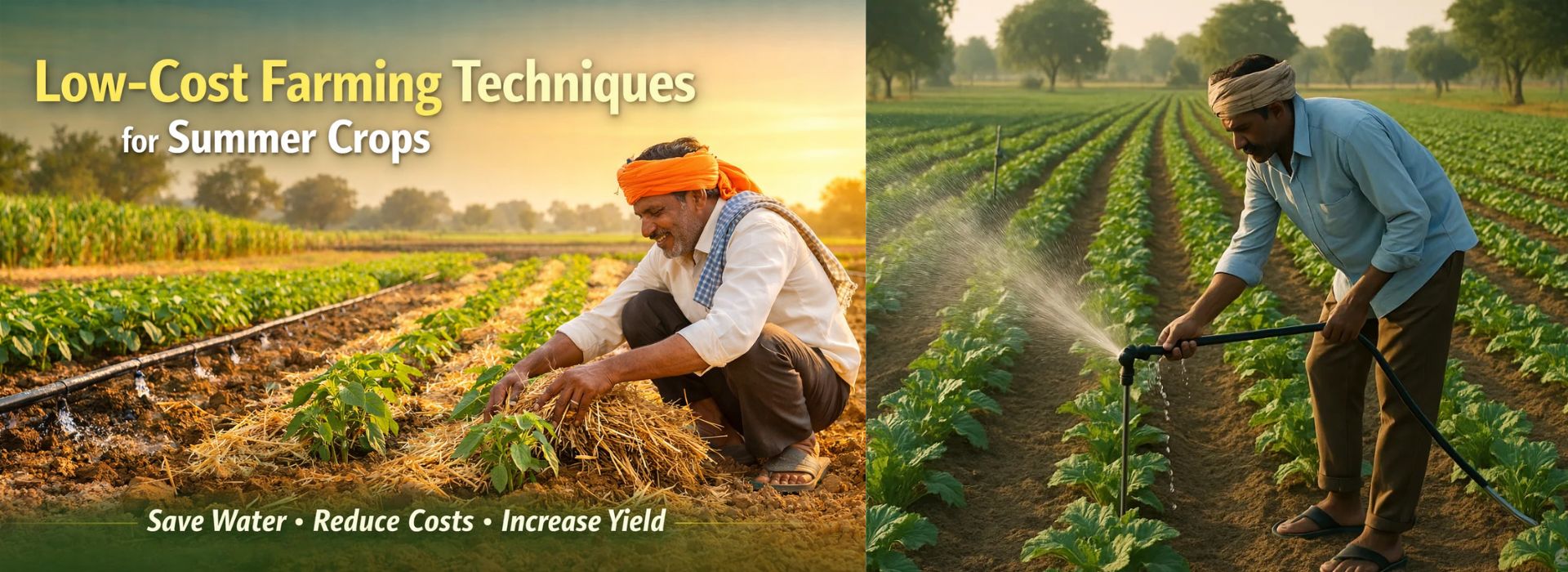
1. Mulching to Save Water
Mulching
is one of the most effective and affordable techniques.
✔ Benefits:
- Reduces
water evaporation
- Controls
weeds
- Maintains
soil moisture
💡
Low-cost options:
- Dry grass
- Crop
residues
- Plastic
mulch (reusable)
🌿
2. Crop Selection & Rotation
Choosing
the right crops can save money and resources.
🌾
Suitable low-water summer crops:
- Millets
(Bajra)
- Pulses
(Moong, Urad)
- Vegetables
like okra and cucumbers
👉 These crops
require less water and input cost.
💦
3. Drip Irrigation (Subsidy-Based)
Though
initial cost exists, subsidies make it affordable.
✔ Advantages:
- Saves up to
50% water
- Reduces
electricity and labor cost
- Improves
yield
🌱
4. Use of Organic Fertilizers
Reduce
dependency on expensive chemical fertilizers.
🌿
Options:
- Compost
- Vermicompost
- Farmyard
manure
👉 Improves
soil health and reduces input cost.
🌾
5. Intercropping for Better Income
Growing
two crops together helps maximize land use.
✔ Benefits:
- Additional
income
- Better soil
fertility
- Risk
reduction
☀️ 6. Shade
Management Techniques
Protect
crops from extreme heat using:
- Shade nets
- Tree-based
farming (Agroforestry)
👉 Helps
reduce crop stress and water loss.
🚜
7. Shared Machinery (Custom Hiring)
Instead
of buying expensive equipment:
- Rent
tractors and tools
- Use custom
hiring centers
👉 Reduces
capital investment.
💧
8. Rainwater Harvesting
Store
water during off-season for summer use.
✔ Methods:
- Farm ponds
- Tarpaulin-lined
pits
👉 Ensures
irrigation during water shortage.
🌿
9. Seed Treatment and Quality Seeds
- Use
certified seeds
- Treat seeds
before sowing
👉 Reduces
disease risk and improves yield at low cost.
📦
10. Direct Marketing of Produce
Sell
directly to:
- Local
markets
- Consumers
- Farmer
groups
👉 Avoids
middlemen and increases profit.
🌟
Additional Tips for Summer Farming
- Irrigate
early morning or evening
- Avoid
overuse of fertilizers
- Monitor
crops regularly
- Use local
resources whenever possible
📊
Conclusion
Low-cost
farming is not about reducing productivity—it’s about using resources wisely.
With simple techniques like mulching, crop selection, organic inputs, and
efficient irrigation, farmers can successfully manage summer crops without high
expenses.
🌱
Final Thought
👉 “Smart farming is not about spending more—it’s about using less and growing more.”
At krishibazaar.in, you
can find and buy various agricultural products. For agricultural guidance on
selecting the most suitable products for your crops, please contact or WhatsApp
at +917887880887.

Guest reviews
No reviews found for this Blog