

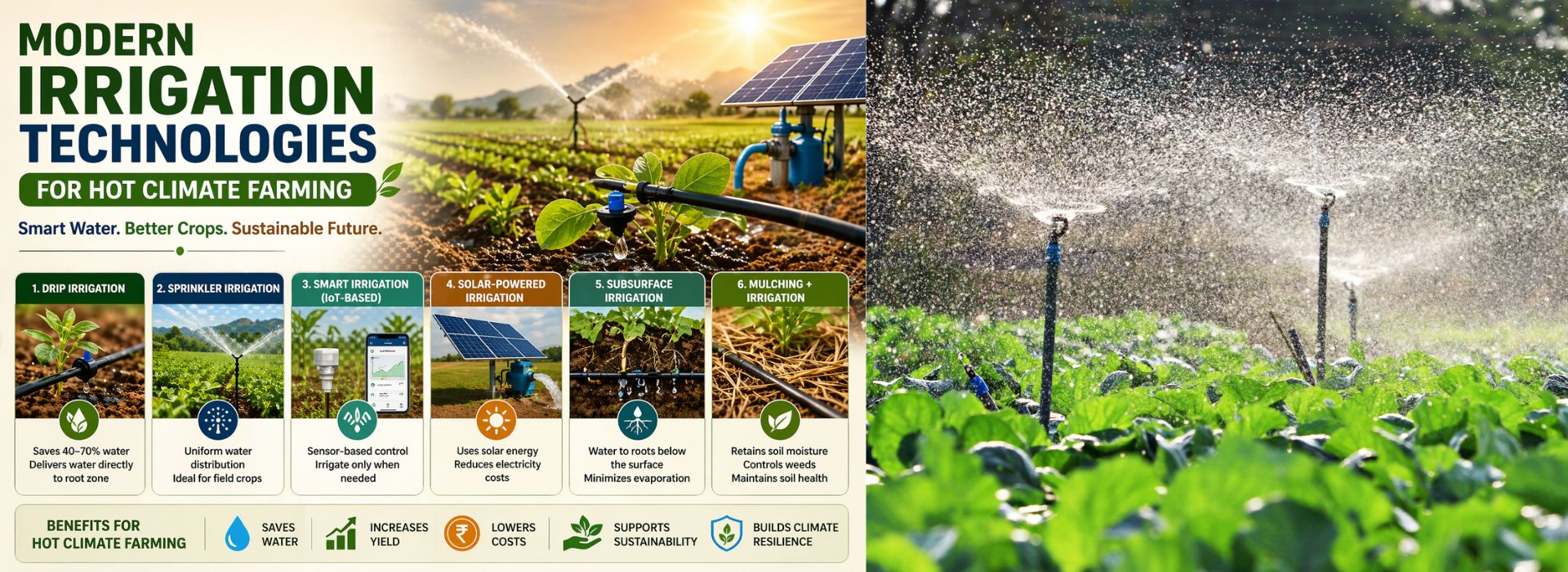
Modern Irrigation Technologies for Hot Climate Farming
April 22, 2026Modern Irrigation Technologies for Hot Climate Farming
Farming in hot climates—common across regions of India—comes
with intense heat, high evaporation, and frequent water stress. Efficient
irrigation is no longer optional; it’s the backbone of productivity and
profitability. This guide explores modern irrigation technologies that help
farmers use less water while achieving better yields.
🌞 Challenges of Farming in Hot Climates
- High
evaporation losses reduce available soil moisture
- Irregular
rainfall leads
to drought-like conditions
- Soil
moisture depletion affects crop growth
- Rising
input costs
(water, energy) increase risk
Modern irrigation systems directly address these problems
through precision and efficiency.
💧 1. Drip Irrigation System
Drip irrigation delivers water directly to the root zone
through emitters.
Key Benefits
- Saves
40–70% water
- Minimizes
evaporation and runoff
- Improves
fertilizer use efficiency (fertigation)
- Ideal
for fruits, vegetables, cotton, sugarcane
Best For
- Horticulture
crops
- Greenhouses
and polyhouses
🌿 2. Sprinkler Irrigation System
Sprinklers simulate rainfall and distribute water uniformly
over fields.
Key Benefits
- Suitable
for uneven land
- Reduces
soil erosion
- Covers
larger areas compared to drip
Types
- Portable
sprinklers
- Center
pivot systems
- Rain-gun
irrigation (useful for field crops)
📱 3. Smart Irrigation Systems (IoT-Based)
Smart irrigation uses sensors, weather data, and automation
to irrigate precisely.
Features
- Soil
moisture sensors trigger irrigation only when needed
- Mobile
app control for remote operation
- Weather-based
scheduling
Benefits
- Prevents
overwatering
- Saves
water and electricity
- Improves
crop health and uniformity
☀️ 4. Solar-Powered Irrigation Systems
Solar pumps use sunlight to power irrigation systems—perfect
for hot, sunny regions.
Advantages
- Reduces
electricity and diesel costs
- Eco-friendly
and reliable
- Works
well with drip and sprinkler systems
Government Support
Subsidies are available under schemes like PM-KUSUM.
🌱 5. Subsurface Irrigation (Underground Drip)
Water is delivered below the soil surface directly to roots.
Benefits
- Almost
zero evaporation loss
- Better
root development
- Long-term
water savings
Ideal For
- High-value
crops
- Dry
and arid regions
🌊 6. Mulching + Irrigation Combination
Using mulch with irrigation systems improves moisture
retention.
Types of Mulch
- Plastic
mulch
- Organic
mulch (straw, leaves)
Benefits
- Reduces
evaporation
- Controls
weeds
- Maintains
soil temperature
📊 Comparison of Technologies
|
Technology |
Water Saving |
Cost Level |
Best Use Case |
|
Drip Irrigation |
High |
Medium |
Fruits, vegetables |
|
Sprinkler System |
Medium |
Medium |
Field crops |
|
Smart Irrigation |
Very High |
High |
Precision farming |
|
Solar Irrigation |
Energy Saving |
High (initial) |
Remote areas |
|
Subsurface Irrigation |
Very High |
High |
High-value crops |
🚜 Tips for Farmers in Hot Regions
- Irrigate
during early morning or evening
- Use
soil moisture testing before watering
- Combine
irrigation with fertigation
- Adopt
crop varieties tolerant to heat
- Maintain
irrigation systems regularly
🌾 Conclusion
Modern irrigation technologies are transforming farming in
hot climates by making every drop count. Whether it’s drip irrigation, smart
sensors, or solar-powered pumps, adopting the right system can significantly
improve crop yield, reduce costs, and ensure sustainable farming.
For farmers, the key is to choose the technology that fits
their crop type, budget, and water availability. Investing in efficient
irrigation today means securing better productivity and profits tomorrow.
At krishibazaar.in, you
can find and buy various agricultural products. For agricultural guidance on
selecting the most suitable products for your crops, please contact or WhatsApp
at +917887880887.

Guest reviews
No reviews found for this Blog