

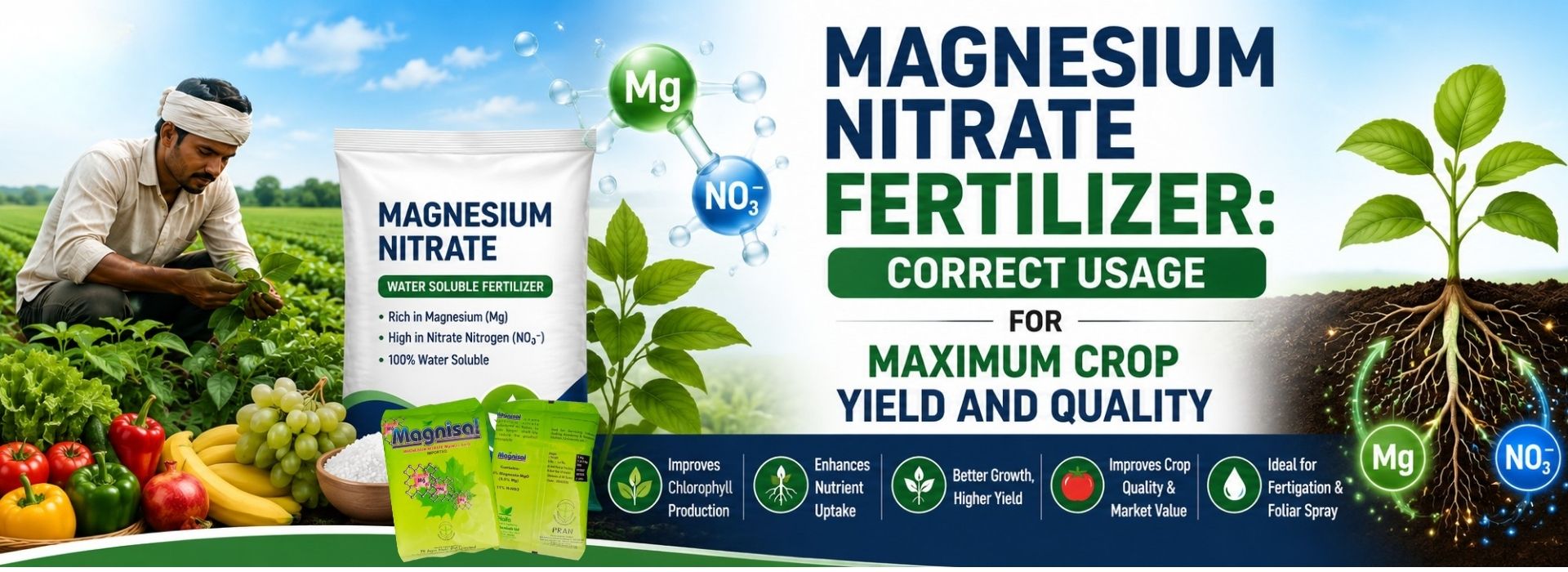
Magnesium Nitrate Fertilizer: Correct Usage for Maximum Crop Yield and Quality
July 21, 2026Magnesium Nitrate Fertilizer: Correct Usage for Maximum Crop
Yield and Quality
Modern agriculture demands balanced nutrition for achieving
higher productivity and premium-quality produce. While farmers often focus on
Nitrogen (N), Phosphorus (P), and Potassium (K), secondary nutrients like Magnesium
(Mg) play an equally important role in crop health.
One of the most effective sources of magnesium is Magnesium
Nitrate Fertilizer, a highly water-soluble fertilizer that supplies both Magnesium
(Mg) and Nitrate Nitrogen (NO₃-N). It is widely used in drip
irrigation, fertigation, foliar sprays, hydroponics, greenhouse farming, and
open-field cultivation.
This guide explains everything you need to know about
Magnesium Nitrate, including its benefits, application methods, dosage, crop
recommendations, and precautions.
What is Magnesium Nitrate Fertilizer?
Magnesium Nitrate is a water-soluble fertilizer
containing:
- Magnesium
(Mg)
- Nitrate
Nitrogen (NO₃)
Unlike ammonium nitrogen, nitrate nitrogen is immediately
available for plant uptake, promoting rapid vegetative growth without causing
excessive soil acidity.
It is especially beneficial during periods of rapid growth,
flowering, fruit development, and grain filling.
Why Magnesium is Essential for Plants
Magnesium is the central element of chlorophyll, the
green pigment responsible for photosynthesis.
Without adequate magnesium:
- Photosynthesis
decreases
- Leaves
turn yellow
- Growth
slows down
- Fruits
become smaller
- Crop
quality declines
Magnesium also helps in:
- Enzyme
activation
- Sugar
transportation
- Protein
synthesis
- Better
nutrient absorption
- Improved
root development
Benefits of Magnesium Nitrate Fertilizer
1. Increases Chlorophyll Production
Magnesium is directly responsible for chlorophyll formation.
Benefits include:
- Dark
green leaves
- Higher
photosynthesis
- Increased
plant energy
- Better
biomass production
2. Improves Nitrogen Efficiency
Since Magnesium Nitrate contains nitrate nitrogen:
- Quick
nutrient absorption
- Healthy
vegetative growth
- Strong
stems
- Faster
crop development
3. Enhances Fruit Quality
Regular application improves:
- Fruit
size
- Fruit
color
- Shine
- Sugar
content (Brix)
- Uniform
maturity
- Shelf
life
Ideal for:
- Banana
- Grapes
- Pomegranate
- Citrus
- Tomato
- Capsicum
4. Prevents Magnesium Deficiency
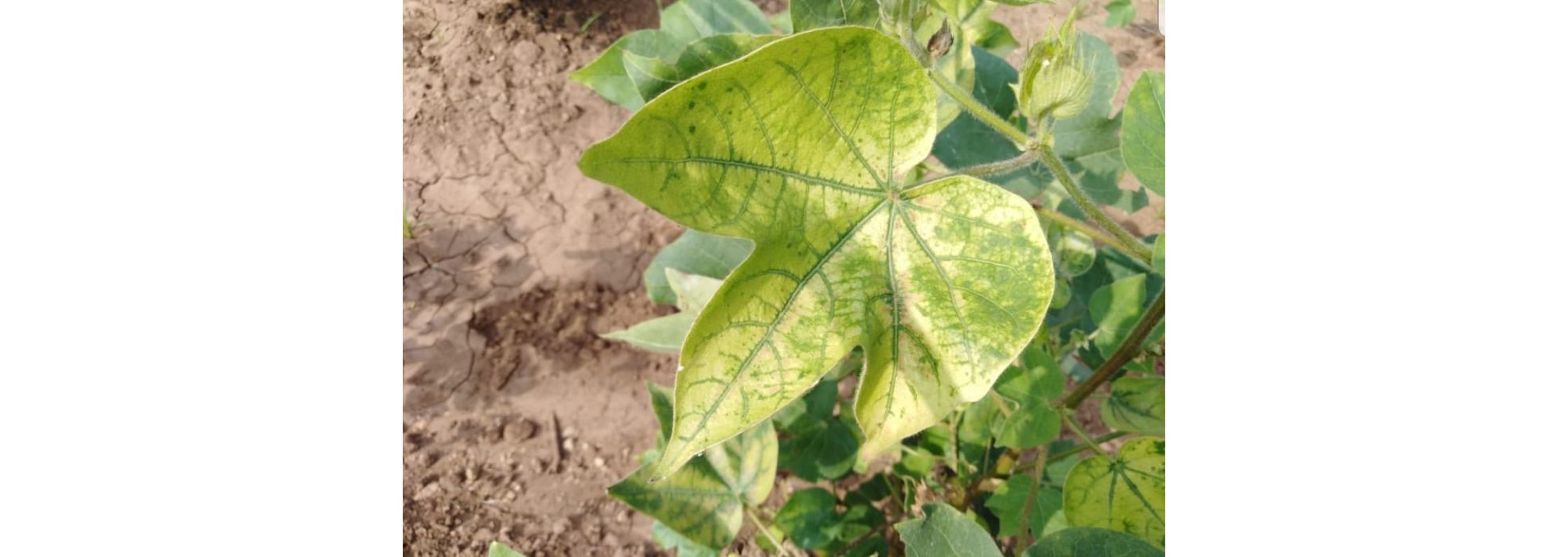
Common deficiency symptoms include:
- Yellowing
between leaf veins
- Older
leaves affected first
- Poor
flowering
- Weak
plant growth
- Reduced
fruit development
Magnesium Nitrate quickly corrects these deficiencies.
5. Increases Crop Yield
Balanced magnesium nutrition leads to:
- More
flowers
- Better
fruit set
- Larger
fruits
- Higher
grain weight
- Improved
market value
Crops Suitable for Magnesium Nitrate
This fertilizer is suitable for almost every crop.
Fruit Crops
- Banana
- Grapes
- Mango
- Citrus
- Pomegranate
- Papaya
Vegetable Crops
- Tomato
- Chilli
- Capsicum
- Onion
- Potato
- Cucumber
- Brinjal
Field Crops
- Cotton
- Maize
- Sugarcane
- Wheat
- Groundnut
- Soybean
Plantation Crops
- Tea
- Coffee
- Coconut
- Arecanut
Flower Crops
- Rose
- Gerbera
- Marigold
- Carnation
Recommended Application Methods
1. Drip Irrigation (Fertigation)
The most efficient method.
Recommended dosage:
2–5 kg per acre per application depending on crop stage.
2. Foliar Spray
Useful when magnesium deficiency appears.
Recommended dosage:
5–10 grams per litre of water
Spray during:
- Early
morning
- Evening
Repeat after 10–15 days if necessary.
3. Hydroponics
Magnesium Nitrate is widely used in hydroponic nutrient
solutions because it dissolves completely without leaving residues.
Best Time to Apply
Apply during:
- Early
vegetative growth
- Flower
initiation
- Fruit
development
- Grain
filling
- Bulb
formation
- Tuber
development
Avoid spraying during peak afternoon temperatures.
Symptoms of Magnesium Deficiency
Farmers should monitor for:
- Yellowing
between leaf veins
- Older
leaves turning pale
- Leaf
curling
- Weak
stems
- Poor
fruit formation
- Reduced
crop vigor
Correcting the deficiency early prevents major yield losses.
Compatibility
Magnesium Nitrate is generally compatible with many
water-soluble fertilizers.
It can often be used with:
- Calcium
Nitrate
- Potassium
Nitrate
- NPK
Water Soluble Fertilizers
- Micronutrients
Always perform a jar compatibility test before mixing
different products in the spray tank or fertigation system.
Precautions
- Use
only clean water.
- Store
in a cool, dry place.
- Seal
the bag properly after use.
- Avoid
excessive application.
- Follow
crop-specific nutrient recommendations.
- Wear
gloves during handling.
Common Farmer Mistakes
Avoid these common mistakes:
❌
Applying without identifying nutrient deficiency
❌
Overdosing during foliar spray
❌
Mixing incompatible fertilizers
❌
Spraying during hot afternoons
❌
Ignoring soil or water test reports
Why Balanced Nutrition Matters
Applying only NPK fertilizers is not enough.
Balanced nutrition involving:
- Nitrogen
- Phosphorus
- Potassium
- Calcium
- Magnesium
- Sulphur
- Micronutrients
ensures:
- Higher
productivity
- Better
crop quality
- Disease
tolerance
- Improved
nutrient use efficiency
- Higher
farm profitability
Related Products to Explore on Krishibazaar
To build a complete crop nutrition program, farmers should
also explore:
- Water
Soluble Fertilizers (NPK)
- Calcium
Nitrate
- Potassium
Nitrate
- Micronutrient
Fertilizers
- Crop
Protection Products
- Seeds
for Various Crops
- Drip
Irrigation Accessories
Suggested Internal Links (Krishibazaar):
- Water
Soluble Fertilizers
- NPK
Fertilizers
- Crop
Protection Products
- Seeds
- Plant
Growth Promoters
- Micronutrients
- Fertigation
Products
Frequently Asked Questions (FAQs)
Is Magnesium Nitrate water soluble?
Yes. It dissolves completely in water and is ideal for
fertigation and foliar application.
Which crops benefit the most?
Banana, grapes, tomato, chilli, citrus, cotton, sugarcane,
vegetables, flowers, and plantation crops.
Can it be used in drip irrigation?
Yes. It is one of the best fertilizers for drip fertigation.
Does Magnesium Nitrate improve fruit quality?
Yes. It improves fruit size, color, sweetness, and shelf
life.
When should it be applied?
During vegetative growth, flowering, fruit development, and
grain filling stages.
Conclusion
Magnesium Nitrate Fertilizer is an excellent choice for
farmers aiming to improve crop health, photosynthesis, nutrient efficiency, and
overall productivity. By supplying both magnesium and readily
available nitrate nitrogen, it supports vigorous growth, greener foliage,
better flowering, superior fruit quality, and increased yields.
When used correctly through fertigation or foliar spray,
Magnesium Nitrate helps prevent nutrient deficiencies and maximizes the return
on your fertilizer investment. Combined with a balanced fertilization program
and proper crop management, it can significantly enhance both crop quality and
farm profitability.
Buy Bulk quantity of Haifa Magnisal Magnesium Nitrate Water
Soluble Fertilizers and Get up to 10% discount. Limited period offer.
Order now 👉 https://tinyurl.com/47x8scpa
Order on Call / WhatsApp - 0788 788 0887
Suggested Hashtags
#MagnesiumNitrate #WaterSolubleFertilizer #CropNutrition
#IndianFarming #Fertigation #PlantHealth #HigherYield #Krishibazaar


Guest reviews
No reviews found for this Blog