

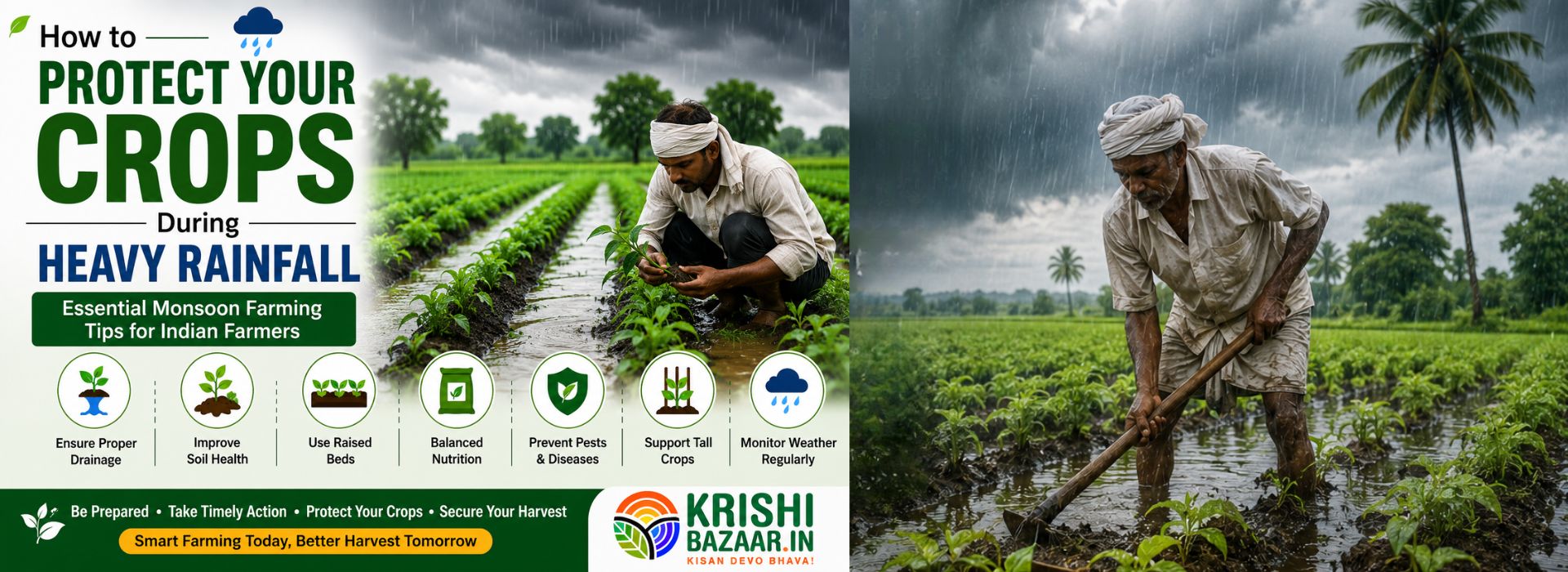
How to Protect Your Crops During Heavy Rainfall: Essential Monsoon Farming Tips for Indian Farmers
July 9, 2026🌧️ How to Protect Your Crops During Heavy Rainfall: Essential
Monsoon Farming Tips for Indian Farmers
Introduction
The monsoon season is a lifeline for Indian agriculture,
providing the water needed for crops to grow and thrive. However, excessive
rainfall, waterlogging, floods, strong winds, and prolonged cloudy weather can
seriously affect crop health, reduce yields, and increase production costs.
Heavy rainfall not only damages standing crops but also
creates favorable conditions for pests, fungal diseases, and nutrient loss from
the soil. By adopting proper crop management practices before, during, and
after heavy rains, farmers can minimize losses and protect their investment.
In this guide, we'll discuss practical and effective methods
to safeguard crops during heavy rainfall and ensure better productivity.
Why Heavy Rainfall is Harmful to Crops
Excessive rainfall can cause several problems, including:
- Waterlogging
in fields
- Root
rot and poor root development
- Soil
erosion
- Nutrient
leaching
- Increased
fungal and bacterial diseases
- Pest
outbreaks
- Lodging
(falling) of crops
- Flower
and fruit drop
- Delayed
harvesting
Proper planning can significantly reduce these risks.
1. Ensure Proper Field Drainage
One of the biggest threats during heavy rainfall is
waterlogging.
Standing water prevents roots from absorbing oxygen, leading
to root decay and plant death.
Best Practices
- Create
drainage channels between crop rows.
- Clean
existing drains before the monsoon.
- Construct
field bunds to direct excess water.
- Remove
standing water within 24–48 hours.
Benefits
- Healthy
root growth
- Better
oxygen availability
- Reduced
disease incidence
- Improved
nutrient uptake
2. Strengthen Soil Health
Healthy soil drains excess water more effectively.
Improve Soil Structure By Using
- Farmyard
Manure (FYM)
- Compost
- Vermicompost
- Organic
Matter
- Bio-fertilizers
These improve soil porosity and water infiltration.
3. Use Raised Bed Cultivation
Raised beds prevent water accumulation around plant roots.
Suitable for:
- Vegetables
- Cotton
- Chilli
- Tomato
- Onion
- Turmeric
Raised beds also improve aeration and reduce disease
pressure.
4. Avoid Excess Fertilizer Application Before Heavy Rain
Heavy rainfall washes away nutrients, reducing fertilizer
efficiency.
Recommended Practices
- Delay
fertilizer application if heavy rain is forecast.
- Split
fertilizer doses.
- Use
water-soluble fertilizers through drip irrigation after rainfall.
- Apply
micronutrients after the soil dries.
This improves nutrient utilization and reduces wastage.
5. Monitor Pest and Disease Outbreaks
Warm and humid conditions encourage rapid pest
multiplication.
Common Monsoon Diseases
- Leaf
Spot
- Downy
Mildew
- Powdery
Mildew
- Bacterial
Blight
- Root
Rot
Common Pests
- Aphids
- Whiteflies
- Thrips
- Caterpillars
- Stem
Borers
Inspect fields regularly and take timely action using
integrated pest management (IPM).
6. Protect Crops from Fungal Diseases
Fungal infections spread rapidly after continuous rainfall.
Preventive Measures
- Improve
field ventilation.
- Remove
infected plant parts.
- Avoid
water stagnation.
- Apply
recommended fungicides or bio-fungicides when required.
Early prevention is more effective than treating severe
infections.
7. Prevent Soil Erosion
Heavy rainfall often washes away fertile topsoil.
Soil Conservation Methods
- Mulching
- Cover
cropping
- Contour
farming on slopes
- Vegetative
barriers
- Farm
bunding
These practices conserve nutrients and maintain soil
fertility.
8. Support Tall and Fruit-Bearing Crops
Strong winds accompanied by heavy rain can damage crops.
Support crops like:
- Banana
- Tomato
- Chilli
- Papaya
- Grapes
Use bamboo stakes, ropes, or trellis systems to reduce
lodging and stem breakage.
9. Remove Fallen Fruits and Diseased Plants
Damaged plant material attracts insects and diseases.
Regularly remove:
- Rotten
fruits
- Broken
branches
- Diseased
leaves
- Fallen
crops
This helps maintain field hygiene and reduces infection.
10. Resume Crop Nutrition After Rainfall
Once the field becomes workable:
- Apply
balanced fertilizers.
- Spray
micronutrients.
- Use
seaweed extracts or amino acid-based plant growth promoters.
- Apply
bio-fertilizers to restore microbial activity.
These help plants recover quickly from stress.
Crop-Specific Monsoon Protection Tips
Cotton
- Ensure
proper drainage.
- Monitor
Pink Bollworm and Whiteflies.
- Avoid
excessive nitrogen application.
- Spray
fungicides if leaf spot appears.
Banana
- Provide
plant support with bamboo poles.
- Remove
excess water immediately.
- Apply
potassium for stronger stems.
- Remove
damaged leaves.
Paddy (Rice)
- Repair
bunds after heavy rain.
- Maintain
optimum water levels.
- Watch
for blast disease and stem borer.
Vegetable Crops
- Grow
on raised beds.
- Improve
drainage.
- Harvest
mature produce before heavy rainfall.
- Monitor
fungal diseases frequently.
Essential Farm Equipment During Monsoon
Every farmer should keep:
- Water
pumps
- Drainage
pipes
- Mulching
sheets
- Sprayers
- Bamboo
stakes
- Protective
crop covers
These tools help reduce crop losses during adverse weather.
How Krishibazaar Helps Farmers During Monsoon
Krishibazaar offers a wide range of agricultural products
that support effective monsoon crop management, including:
Available Categories
- Quality
Seeds
- Water
Soluble Fertilizers
- Micronutrients
- Bio
Fertilizers
- Bio
Fungicides
- Bio
Pesticides
- Crop
Protection Products
- Plant
Growth Promoters
- Mulching
Sheets
- Irrigation
Products
- Agricultural
Tools
Visit https://krishibazaar.in
to explore products designed to help farmers improve crop health and
productivity during the monsoon season.
Quick Checklist Before Heavy Rain
✅
Clean drainage channels
✅
Strengthen field bunds
✅
Delay fertilizer application if rain is expected
✅ Keep
fungicides and bio-pesticides ready
✅
Support tall crops
✅
Monitor weather forecasts regularly
✅
Remove standing water quickly
✅
Inspect crops for pests and diseases
Conclusion
Heavy rainfall is an unavoidable part of the Indian monsoon,
but its impact on farming can be minimized through proper planning and timely
management. Good drainage, balanced nutrition, disease prevention, and regular
field monitoring are key to protecting crops and ensuring a healthy harvest.
By adopting these monsoon farming practices and using quality
agricultural inputs, Indian farmers can reduce crop losses, improve
productivity, and achieve better long-term profitability.
Preparing before the rain is always more effective than
recovering after the damage.


Guest reviews
No reviews found for this Blog