

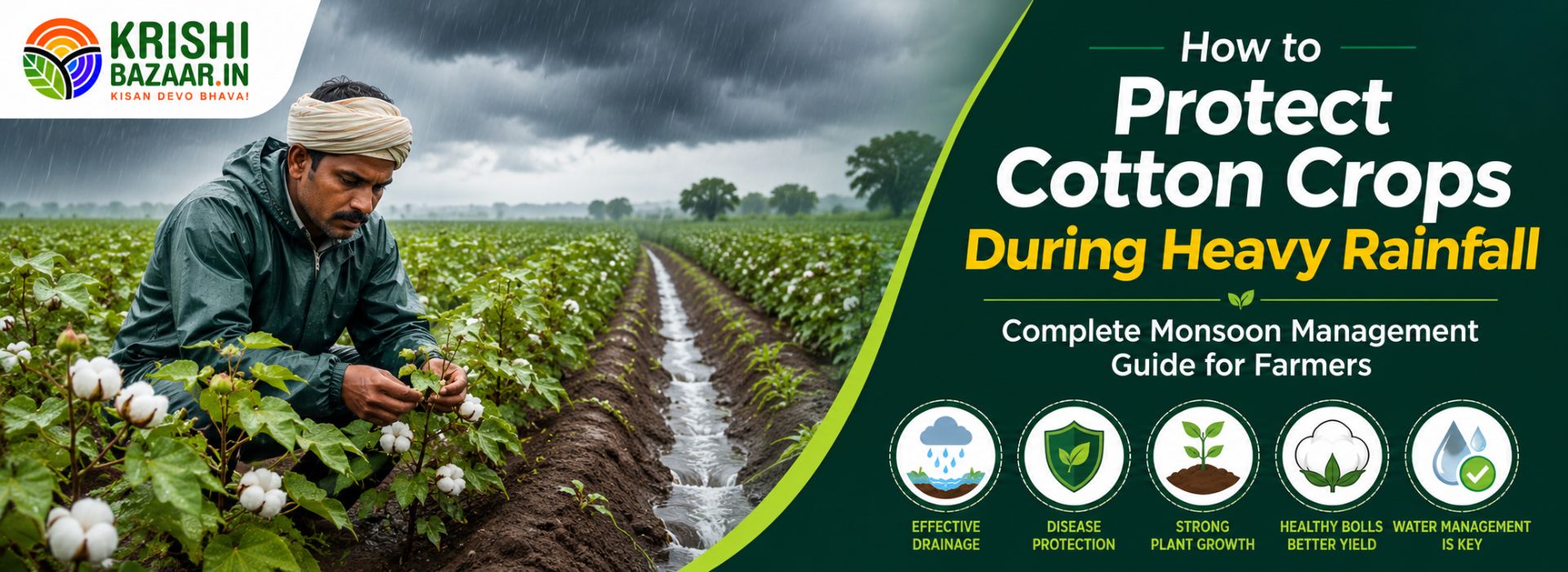
How to Protect Cotton Crops During Heavy Rainfall: Complete Monsoon Management Guide for Farmers
July 30, 2026How to Protect Cotton Crops During Heavy Rainfall: Complete
Monsoon Management Guide for Farmers
Cotton is one of India's most important commercial crops,
contributing significantly to the country's agricultural economy. However, heavy
rainfall during the monsoon season can severely affect cotton growth,
reduce yield, and increase the risk of diseases and pest attacks.
Excess water causes waterlogging, root damage, nutrient
loss, boll shedding, and fungal infections, ultimately reducing both crop
quality and farmer profits.
This guide explains the best practices to protect cotton
crops during heavy rains and ensure healthy plant growth throughout the season.
Why Heavy Rainfall is Harmful for Cotton?
Cotton plants prefer well-drained soil. Continuous
rainfall leads to:
- Waterlogging
around roots
- Reduced
oxygen availability
- Root
rot
- Nutrient
leaching
- Flower
and boll dropping
- Increased
fungal diseases
- Pest
outbreaks
Proper field management can minimize these losses.
1. Improve Field Drainage Immediately
The first priority after heavy rain is removing excess water
from the field.
Recommended Practices
- Create
drainage channels between rows.
- Open
blocked water outlets.
- Remove
standing water within 24–48 hours.
- Maintain
proper field slope for water flow.
- Avoid
long-term water stagnation.
Good drainage prevents root suffocation and reduces disease
incidence.
2. Monitor Waterlogging Areas
Low-lying portions of the field are more vulnerable.
Inspect these areas regularly for:
- Yellowing
leaves
- Wilting
plants
- Poor
growth
- Root
damage
If required, create temporary drainage outlets immediately.
3. Spray Preventive Fungicides
High humidity promotes fungal diseases.
Common cotton diseases include:
- Root
Rot
- Wilt
- Alternaria
Leaf Spot
- Grey
Mildew
- Bacterial
Blight
Preventive fungicide applications can significantly reduce
disease spread.
Always follow agricultural department recommendations or
consult local experts before spraying.
4. Manage Nutrient Loss After Rain
Heavy rain washes away nutrients, especially:
- Nitrogen
- Potassium
- Sulphur
- Magnesium
Recommended Nutrient Management
- Apply
split doses of nitrogen.
- Use
water-soluble fertilizers through drip irrigation.
- Apply
micronutrients as foliar sprays.
- Avoid
fertilizer application before heavy rainfall.
Balanced nutrition helps cotton recover quickly.
5. Strengthen Plant Growth with Foliar Nutrition
Foliar feeding helps stressed plants recover faster.
Useful nutrients include:
- Potassium
- Magnesium
- Calcium
- Micronutrient
mixtures
- Amino
acid-based biostimulants
These improve photosynthesis and support boll retention.
6. Keep Weed Growth Under Control
Heavy rains accelerate weed growth.
Weeds compete with cotton for:
- Water
- Nutrients
- Sunlight
Practice:
- Mechanical
weeding
- Mulching
- Timely
herbicide application (if recommended)
Clean fields also improve air circulation.
7. Watch for Pest Outbreaks
Rainy weather creates favorable conditions for pests such as:
- Aphids
- Whiteflies
- Jassids
- Thrips
- Pink
Bollworm (depending on crop stage)
Regular field scouting helps detect infestations early.
Use Integrated Pest Management (IPM) practices for
sustainable control.
8. Remove Diseased Plants
Plants severely affected by fungal infections should be
removed immediately.
This prevents disease spread to healthy plants.
Dispose of infected plant material away from the field.
9. Improve Air Circulation
Dense crop canopy retains moisture.
Good airflow reduces fungal diseases.
Maintain:
- Proper
plant spacing
- Timely
pruning of unnecessary branches (where appropriate)
- Clean
field sanitation
10. Avoid Field Operations in Wet Soil
Walking or using machinery in wet fields causes:
- Soil
compaction
- Root
damage
- Poor
aeration
Wait until the soil reaches workable moisture before entering
the field.
11. Inspect Cotton Bolls Regularly
After continuous rainfall, check bolls for:
- Rotting
- Cracking
- Insect
damage
- Premature
opening
Early identification helps prevent further losses.
12. Use Mulching Wherever Possible
Organic mulch helps:
- Reduce
soil erosion
- Improve
soil structure
- Minimize
splash-borne diseases
- Maintain
balanced soil moisture
Suitable mulching materials include:
- Crop
residue
- Straw
- Organic
compost
13. Maintain Soil Health
Healthy soil recovers faster after excessive rainfall.
Improve soil by adding:
- Farmyard
manure (FYM)
- Vermicompost
- Organic
carbon
- Biofertilizers
Healthy soil supports stronger root development.
Signs Your Cotton Crop Needs Immediate Attention
Look for:
- Yellow
leaves
- Wilting
despite wet soil
- Blackened
roots
- Leaf
spots
- Flower
dropping
- Boll
shedding
- Slow
growth
- Pest
infestation
Early intervention prevents major yield losses.
Recommended Inputs After Heavy Rain
Farmers may consider:
- Water-soluble
fertilizers
- Magnesium
fertilizers
- Potassium
fertilizers
- Micronutrient
mixtures
- Bio-stimulants
- Fungicides
(as per recommendation)
- Biofungicides
- Drip
irrigation nutrients
Always use products according to label instructions and local
agricultural recommendations.
Additional Monsoon Cotton Management Tips
- Monitor
weather forecasts daily.
- Avoid
unnecessary irrigation.
- Keep
drainage channels clean.
- Scout
fields every 2–3 days.
- Use
disease-resistant cotton varieties where suitable.
- Maintain
balanced fertilizer schedules.
- Keep
records of rainfall and crop condition.
Benefits of Proper Rain Management
Following these practices helps farmers achieve:
- Better
root health
- Reduced
disease incidence
- Improved
nutrient uptake
- Lower
boll shedding
- Higher
cotton yield
- Better
fibre quality
- Increased
farm profitability
Conclusion
Heavy rainfall is unavoidable during the Indian monsoon, but
proper planning and timely management can greatly reduce its impact on cotton
crops. Efficient drainage, balanced nutrition, regular pest and disease
monitoring, and good field sanitation are essential for maintaining healthy
cotton plants and achieving higher yields.
By adopting these scientifically recommended practices,
cotton farmers can protect their crops, reduce production losses, and improve
overall profitability even during challenging weather conditions.
Frequently Asked Questions (FAQs)
1. How long can cotton tolerate standing water?
Cotton is highly sensitive to waterlogging. Standing water
for more than 24–48 hours can damage roots and reduce yields.
2. Should I apply fertilizer immediately after heavy rain?
Only after excess water has drained. Split applications and
foliar nutrition are often more effective following heavy rainfall.
3. What diseases are common in cotton during the monsoon?
Root rot, wilt, Alternaria leaf spot, grey mildew, and
bacterial blight are common in humid conditions.
4. How can I reduce boll shedding after heavy rainfall?
Maintain proper drainage, provide balanced nutrition
(especially potassium and magnesium), and manage pests and diseases promptly.
5. How often should cotton fields be inspected during the
rainy season?
Inspect fields every 2–3 days, especially after heavy
rain, to detect waterlogging, diseases, and pest infestations early.
Suggested Internal Links for Krishibazaar
Include links within the blog to these relevant categories:
- Cotton
Seeds
- Water
Soluble Fertilizers
- NPK
Fertilizers
- Micronutrient
Fertilizers
- Magnesium
Fertilizers
- Plant
Growth Promoters
- Crop
Protection Products
- Fungicides
- Insecticides
- Drip
Irrigation Products
- Agricultural
Tools & Equipment
- Cotton
Farming Blog
- Heavy
Rainfall Crop Protection Guide
- Monsoon
Farming Tips



Guest reviews
No reviews found for this Blog