

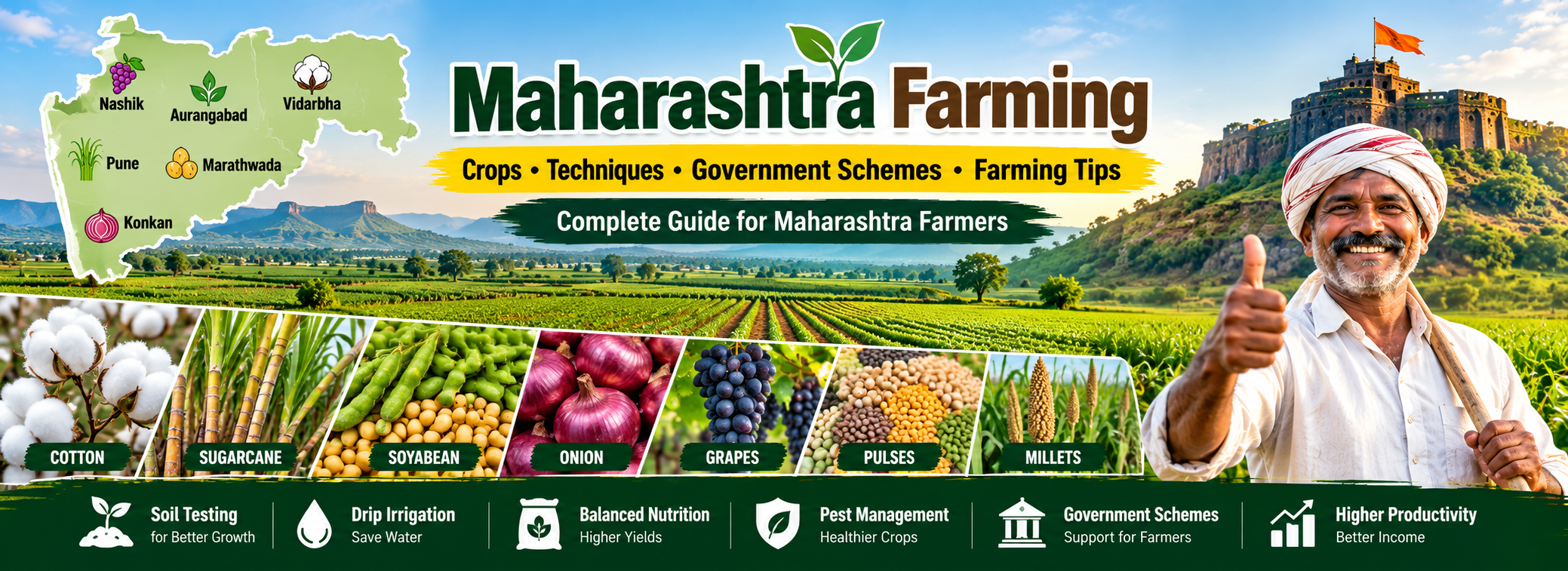
Maharashtra Farming Guide: Crops, Tips & Schemes
October 21, 2026Explore Maharashtra farming, major crops, modern farming techniques, fertilizer management, irrigation methods, and government schemes for farmers.
Crop Loss Compensation in India: How Farmers Can Apply and Get Financial Relief
Farmers across India depend on agriculture for their livelihood, but unexpected weather conditions, floods, droughts, heavy rainfall, pests, and diseases can cause significant crop damage. Crop loss can affect farmers' income, increase debt, and create difficulties for the next cultivation season. Understanding crop loss compensation in India can help farmers identify available government support and crop insurance benefits.
Through schemes such as the Pradhan Mantri Fasal Bima Yojana (PMFBY), eligible farmers can receive financial protection against specified crop losses, subject to scheme guidelines and eligibility requirements.
What Is Crop Loss Compensation?
Crop loss compensation refers to financial assistance provided to eligible farmers when their crops are damaged by covered natural calamities or other notified risks. Support may be available through crop insurance claims or state government relief programmes, depending on the nature of the loss and applicable rules.
Farmers should understand that compensation is not automatically guaranteed for every damaged crop. Eligibility depends on the scheme, insured crop, location, type of damage, and the required assessment process.
Major Causes of Crop Loss in India
Several factors can reduce agricultural production and cause financial losses for farmers, including:
Drought: Insufficient rainfall and water shortages can affect crop growth.
Floods and heavy rainfall: Excess water can damage standing crops and farmland.
Cyclones and hailstorms: Severe weather can destroy crops and reduce yields.
Pests and diseases: Pest infestations and plant diseases can affect crop quality and production.
Unseasonal rainfall: Unexpected rain can damage crops during harvesting and post-harvest stages.
Other notified risks: Certain localized calamities and additional risks may be covered under applicable insurance guidelines.
The risks covered depend on the particular scheme and the state's notifications.
Pradhan Mantri Fasal Bima Yojana (PMFBY)
The Pradhan Mantri Fasal Bima Yojana is a major government crop insurance scheme designed to protect eligible farmers against specified agricultural risks. It provides financial support through insurance claims when covered losses occur.
Under PMFBY, the maximum farmer premium rates for notified crops are generally:
Kharif food and oilseed crops: 2% of the sum insured.
Rabi food and oilseed crops: 1.5% of the sum insured.
Annual commercial and horticultural crops: 5% of the sum insured.
Applicable premiums, coverage, and enrolment deadlines depend on the notified crop, season, and location. Farmers should verify the current details through the official PMFBY portal.
How to Report Crop Damage and Apply for Compensation
Farmers should follow these steps after experiencing crop damage:
Step 1: Check crop insurance coverage
Confirm whether the crop and location are covered under PMFBY or another applicable insurance or relief programme.
Step 2: Report the crop loss promptly
For eligible localized calamities and specified post-harvest losses under PMFBY, farmers generally need to report the damage within 72 hours. Use the official Crop Insurance App, contact the insurer, or follow the prescribed reporting procedure.
Step 3: Keep the necessary documents ready
Prepare relevant identification, land or tenancy records, crop details, insurance application or policy information, bank details, and photographs of damaged crops, as applicable.
Step 4: Cooperate with the assessment
Authorities and insurance representatives may inspect the affected field and assess the extent of the damage according to the applicable guidelines.
Step 5: Track the claim status
Follow up with the insurer or relevant agriculture department and check the claim status through official channels. Approved payments are made according to the scheme's claim settlement process.
Farmers can visit the official website: https://pmfby.gov.in/
Important Tips for Farmers
Enrol in crop insurance within the prescribed deadline.
Verify that the correct crop and land details are recorded.
Keep insurance receipts and application numbers safe.
Report eligible crop damage without delay.
Preserve photographs and supporting documents.
Contact the local agriculture department if you need clarification about state-specific relief programmes.
How KrishiBazaar.in Helps Farmers
KrishiBazaar.in aims to help farmers access useful agricultural information, farming inputs, and resources that support better farming decisions. Staying informed about crop protection, government schemes, fertilizers, and agricultural practices can help farmers prepare for seasonal challenges.
Visit KrishiBazaar.in to explore agricultural products and farming-related information.
Conclusion
Crop loss compensation can provide important financial support to eligible farmers affected by natural calamities and other covered risks. Understanding PMFBY, reporting crop damage on time, maintaining proper documents, and following official procedures can help farmers navigate the compensation process more effectively.
Farmers should always verify current eligibility requirements and deadlines with official government sources before applying. Stay connected with KrishiBazaar.in for useful farming information, agricultural products, and updates that support India's farming community.
Maharashtra Farming: Crops, Modern Techniques, Government Schemes and Farming Tips
Maharashtra is one of India's leading agricultural states, known for its diverse climate, fertile regions, and production of cotton, sugarcane, soybean, grapes, onions, and other important crops. However, farmers face challenges such as irregular rainfall, drought, rising input costs, and pest attacks. Understanding Maharashtra farming practices, modern agricultural techniques, and government support can help farmers improve productivity and manage risks.
Importance of Agriculture in Maharashtra
Agriculture plays an important role in Maharashtra's rural economy. Farmers cultivate different crops depending on rainfall, soil conditions, irrigation facilities, and local markets. Western Maharashtra is well known for sugarcane, while Vidarbha has significant cotton and soybean cultivation. Nashik is famous for grapes and onions, and parts of Marathwada grow pulses, cotton, and oilseeds.
Selecting suitable crops according to local conditions can help farmers use water, fertilizers, and other agricultural resources more efficiently.
Major Crops Grown in Maharashtra
The major crops grown across Maharashtra include:
Cotton: An important cash crop, particularly in Vidarbha and Marathwada.
Sugarcane: Widely cultivated in irrigated areas of western Maharashtra.
Soybean: A significant oilseed crop grown during the Kharif season.
Onion: Maharashtra is a major onion-producing state, with Nashik being an important production region.
Grapes: Commercially cultivated in Nashik and surrounding areas.
Pulses: Tur, gram, and other pulses support food security and soil fertility.
Millets: Jowar, bajra, and other millets are suitable for various rain-fed farming regions.
Farmers should choose crops based on local soil tests, water availability, seasonal weather, and market demand.
Modern Farming Techniques for Better Productivity
Modern agricultural practices can help Maharashtra farmers improve crop management and reduce avoidable input costs.
1. Soil Testing: Soil testing helps determine nutrient availability and supports balanced fertilizer application.
2. Drip Irrigation: Drip systems deliver water directly to the root zone, helping conserve water when properly designed and maintained.
3. Integrated Pest Management: Combining field monitoring, biological controls, cultural practices, and suitable crop protection products can help manage pests responsibly.
4. Improved Seeds: Select certified seeds and varieties suitable for local conditions and the recommended sowing season.
5. Organic Matter Management: Compost, crop residues, and other appropriate organic materials can help improve soil structure and long-term soil health.
6. Weather-Based Crop Planning: Monitoring rainfall forecasts and agricultural advisories can help farmers make better decisions about sowing, irrigation, and spraying.
Government Schemes for Maharashtra Farmers
Eligible farmers may benefit from government programmes supporting crop insurance, irrigation, income assistance, and agricultural development. Important schemes include the Pradhan Mantri Fasal Bima Yojana (PMFBY), the Pradhan Mantri Krishi Sinchayee Yojana, and other applicable central and Maharashtra state initiatives.
Scheme eligibility, benefits, application deadlines, and required documents can change. Farmers should check the Maharashtra Agriculture Department website and official government portals for current information before applying.
Fertilizer Management and Crop Nutrition
Balanced crop nutrition is essential for healthy plant growth and improved agricultural productivity. Farmers should use fertilizers according to soil test results, crop requirements, and recommended application rates.
Products containing nitrogen, phosphorus, potassium, and essential micronutrients can support crop development when used appropriately. Avoid excessive fertilizer application, as it can increase costs and contribute to soil and water pollution.
Farmers can explore agricultural inputs and farming-related resources at KrishiBazaar.in to support informed purchasing decisions.
How KrishiBazaar.in Supports Maharashtra Farmers
KrishiBazaar.in provides a platform for exploring agricultural products and farming-related information. Farmers can use the website to discover suitable agricultural inputs and learn about crop nutrition and farming practices.
Before purchasing any agricultural product, verify its suitability for your crop, recommended dosage, label instructions, and applicable safety precautions.
Conclusion
Maharashtra farming offers opportunities across cotton, soybean, sugarcane, onion, grapes, pulses, and other crops. By adopting soil testing, efficient irrigation, balanced fertilizer use, integrated pest management, and informed crop planning, farmers can improve resource efficiency and manage agricultural risks.
Stay connected with KrishiBazaar.in for agricultural products, crop nutrition information, and practical farming resources that support farmers across Maharashtra and India.




Guest reviews
No reviews found for this Blog