

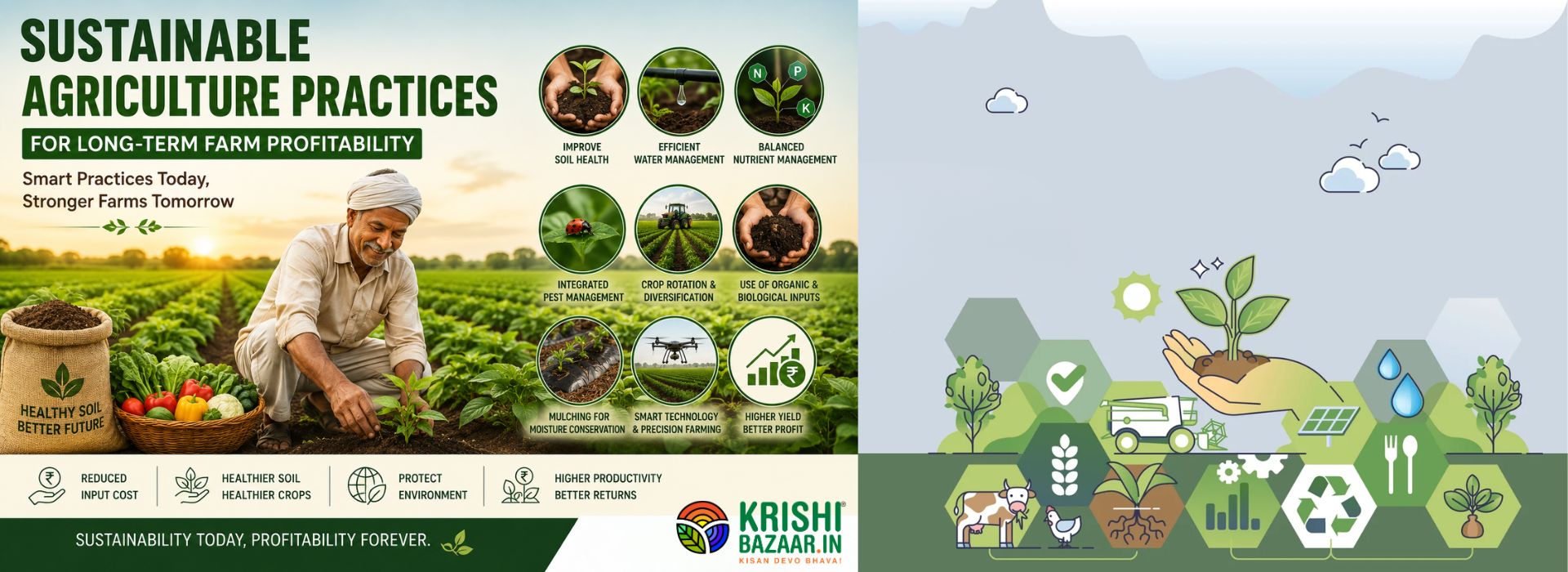
Sustainable Agriculture Practices for Long-Term Farm Profitability
June 18, 2026Sustainable Agriculture Practices for Long-Term Farm
Profitability
Agriculture is the backbone of India's economy, supporting
millions of farmers and contributing significantly to food security. However,
increasing input costs, soil degradation, water scarcity, and climate change
have made traditional farming practices less sustainable. To ensure long-term
farm profitability and environmental conservation, farmers are increasingly
adopting sustainable agriculture practices.
Sustainable agriculture focuses on maintaining productivity
while protecting natural resources, reducing environmental impact, and
improving farmers' livelihoods. In this blog, we explore the key sustainable
farming practices that can help farmers achieve higher profits and long-term
success.
What is Sustainable Agriculture?
Sustainable agriculture is a farming approach that meets
current food and fiber needs without compromising the ability of future
generations to meet their own needs. It combines economic profitability,
environmental stewardship, and social responsibility.
Key Objectives
- Improve
soil health
- Conserve
water resources
- Reduce
chemical dependency
- Enhance
biodiversity
- Increase
farm profitability
- Promote
climate resilience
1. Improve Soil Health Through Organic Matter Management
Healthy soil is the foundation of sustainable farming.
Continuous use of chemical fertilizers without replenishing organic matter can
reduce soil fertility over time.
Best Practices
- Apply
farmyard manure (FYM)
- Use
compost and vermicompost
- Incorporate
crop residues
- Grow
green manure crops
- Apply
bio-fertilizers
Benefits
- Improved
soil structure
- Better
water retention
- Enhanced
microbial activity
- Reduced
fertilizer requirements
Explore Organic Inputs:
https://krishibazaar.in
2. Balanced Nutrient Management
Excessive fertilizer application increases production costs
and harms soil health. Balanced nutrient management ensures crops receive the
right nutrients at the right time.
Recommended Practices
- Conduct
regular soil testing
- Use
micronutrients based on deficiencies
- Apply
water-soluble fertilizers through drip irrigation
- Integrate
organic and inorganic nutrient sources
- Adopt
nano fertilizers for better nutrient efficiency
Benefits
- Improved
nutrient uptake
- Reduced
fertilizer wastage
- Higher
crop productivity
- Better
profitability
3. Efficient Water Management
Water scarcity is becoming a major challenge for agriculture.
Efficient irrigation practices help conserve water while maintaining crop
productivity.
Water-Saving Techniques
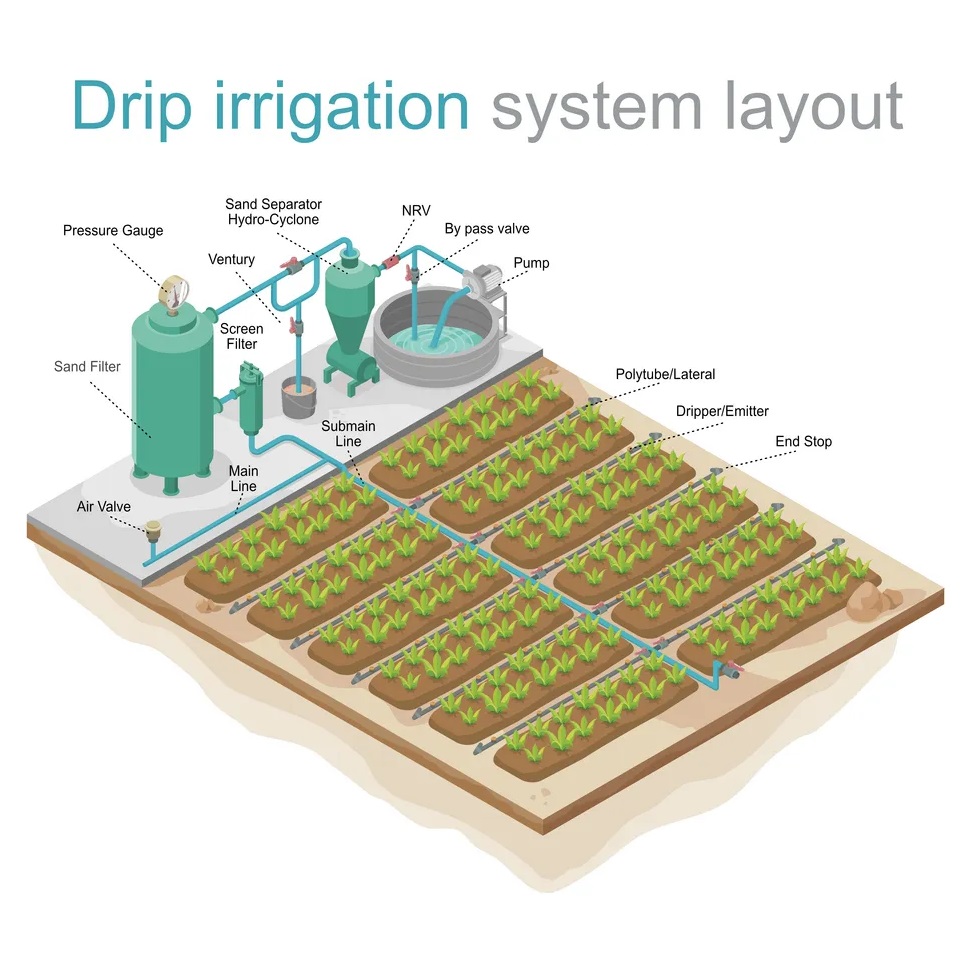
- Drip
irrigation systems
- Sprinkler
irrigation
- Mulching
- Rainwater
harvesting
- Soil
moisture monitoring
Benefits
- Reduced
water consumption
- Lower
irrigation costs
- Better
crop growth
- Increased
water-use efficiency
4. Integrated Pest Management (IPM)
Heavy dependence on chemical pesticides can increase
production costs and create environmental concerns.
Integrated Pest Management combines biological, cultural, and
chemical methods to control pests effectively.
IPM Strategies
- Use
pest-resistant crop varieties
- Install
traps and lures
- Encourage
beneficial insects
- Practice
crop rotation
- Use
bio-pesticides whenever possible
Benefits
- Reduced
pesticide expenses
- Lower
environmental impact
- Improved
crop quality
- Sustainable
pest control
5. Crop Rotation and Diversification
Growing the same crop repeatedly can lead to nutrient
depletion and increased pest pressure.
Recommended Practices
- Rotate
cereals with legumes
- Include
cover crops
- Diversify
cropping systems
- Integrate
horticulture and cash crops
Benefits
- Improved
soil fertility
- Reduced
disease incidence
- Better
risk management
- Additional
income sources
6. Adoption of Organic and Biological Inputs
The demand for residue-free and organic produce is increasing
globally. Biological inputs can reduce chemical dependency and improve
sustainability.
Popular Organic Inputs
- Bio
Fertilizers
- Bio
Fungicides
- Bio
Pesticides
- Seaweed
Extracts
- Humic
Acid Products
Benefits
- Healthier
crops
- Improved
soil biodiversity
- Better
market value
- Environmental
protection
7. Precision Farming Technologies
Modern technology helps farmers make informed decisions and
optimize resource utilization.
Technologies Driving Sustainable Agriculture
- Soil
testing tools
- Weather
forecasting applications
- GPS-based
field mapping
- Drone
monitoring
- Smart
irrigation systems
Benefits
- Reduced
input costs
- Better
crop monitoring
- Improved
productivity
- Enhanced
profitability
8. Mulching and Crop Protection
Mulching helps conserve soil moisture, suppress weeds, and
improve crop performance.
Types of Mulching
- Plastic
Mulch
- Organic
Mulch
- Biodegradable
Mulch
Benefits
- Water
conservation
- Reduced
weed growth
- Better
root development
- Higher
yields
Economic Benefits of Sustainable Agriculture
Farmers often believe sustainable practices increase costs.
However, the long-term benefits significantly outweigh initial investments.
Profitability Advantages
- Reduced
fertilizer expenses
- Lower
pesticide costs
- Improved
soil productivity
- Better
crop quality
- Higher
market prices
- Reduced
crop losses
- Increased
resilience to climate change
How Krishibazaar Supports Sustainable Farming
Krishibazaar provides farmers with access to quality
agricultural inputs that support sustainable and profitable farming.
Available Categories
- Seeds
- Organic
Products
- Bio
Fertilizers
- Bio
Pesticides
- Bio
Fungicides
- Water
Soluble Fertilizers
- Micronutrients
- Irrigation
Products
- Mulching
Solutions
- Crop
Protection Products
Visit:
https://krishibazaar.in
Farmers can find reliable products and expert guidance to
implement sustainable agricultural practices effectively.
Conclusion
Sustainable agriculture is not just an environmental
responsibility; it is a smart business strategy for long-term farm
profitability. By improving soil health, conserving water, adopting integrated
pest management, and utilizing quality agricultural inputs, farmers can
increase productivity while reducing costs.
The future of farming lies in balancing profitability with
sustainability. Investing in sustainable agriculture today will ensure
healthier soils, better yields, and stronger farm incomes for generations to
come.

Guest reviews
No reviews found for this Blog