

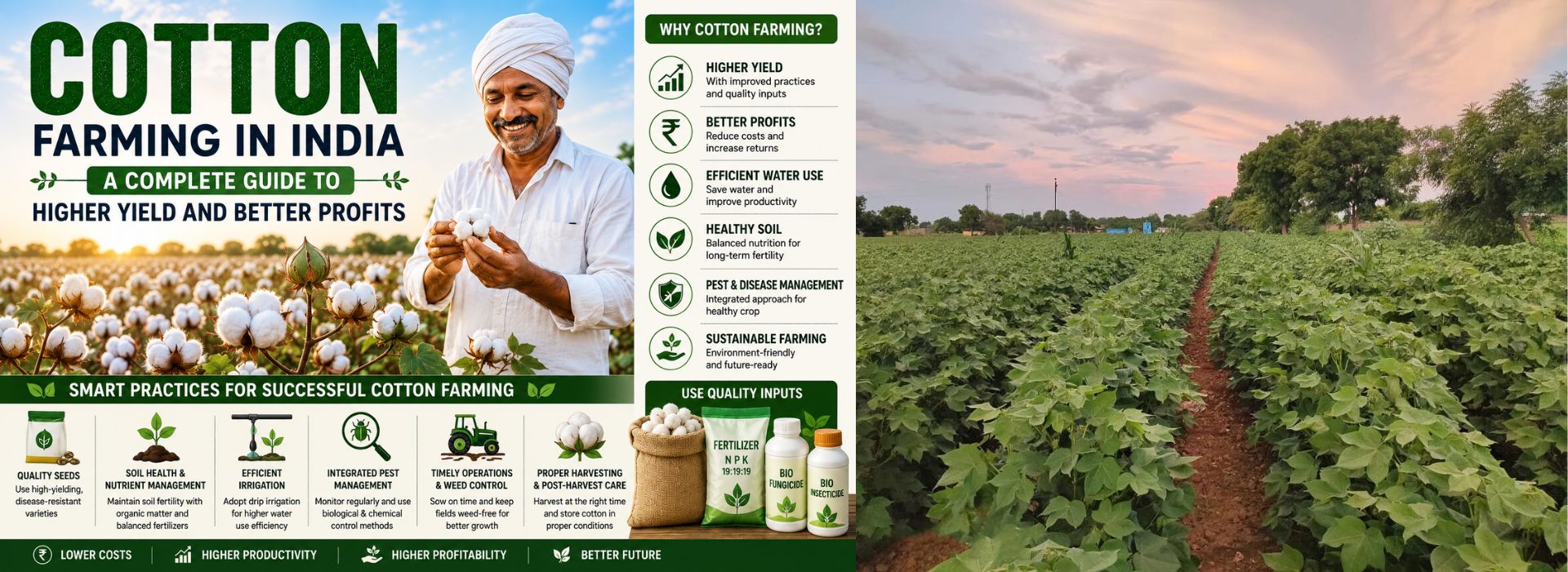
Cotton Farming in India: A Complete Guide to Higher Yield and Better Profits
June 22, 2026Cotton Farming in India: A Complete Guide to Higher Yield and
Better Profits
Cotton, often called the "White Gold" of
agriculture, is one of India's most important cash crops. India is among the
world's largest producers of cotton, contributing significantly to the textile
industry and rural economy. With proper crop management, improved seed
selection, balanced nutrition, and effective pest control, cotton farmers can
achieve higher yields and better profitability.
In this comprehensive guide, we'll explore the best practices
for successful cotton cultivation in India.
Importance of Cotton Farming in India
Cotton plays a vital role in India's agricultural sector by:
- Providing
raw material to the textile industry
- Generating
employment in rural areas
- Supporting
export earnings
- Offering
good income opportunities for farmers
Major cotton-producing states include Maharashtra, Gujarat,
Telangana, Andhra Pradesh, Punjab, Haryana, Rajasthan, Karnataka, and Madhya
Pradesh.
Suitable Climate for Cotton Cultivation
Cotton grows best under:
- Temperature:
21°C to 30°C
- Rainfall:
50–100 cm annually
- Bright
sunshine during growth and boll formation
- Frost-free
conditions
Excessive rainfall or prolonged humidity can increase disease
incidence and affect yield.
Best Soil for Cotton Farming
Cotton performs well in:
- Deep
black cotton soil
- Well-drained
loamy soil
- Soil
pH between 6.0 and 8.0
Avoid waterlogged fields, as they can damage root development
and increase disease pressure.
Choosing the Right Cotton Seeds
Seed selection is one of the most critical decisions for
cotton farmers.
Factors to Consider:
- Region-specific
varieties
- High-yielding
hybrids
- Pest
and disease tolerance
- Drought
resistance
- Market
demand
Seed Treatment
Before sowing:
- Treat
seeds with recommended fungicides
- Use
biofertilizers and beneficial microbes
- Protect
seedlings from soil-borne diseases
High-quality seeds ensure better germination, uniform growth,
and improved productivity.
Land Preparation
Proper field preparation helps establish a healthy crop.
Steps:
- Deep
ploughing before the season.
- Remove
weeds and crop residues.
- Incorporate
organic manure.
- Level
the field properly.
- Create
ridges and furrows where suitable.
Good soil preparation promotes root growth and improves
moisture retention.
Sowing Time
Recommended Sowing Period
- North
India: April to May
- Central
India: June to July
- South
India: Based on monsoon patterns
Timely sowing helps avoid pest infestations and maximizes
yield potential.
Optimum Plant Spacing
Recommended spacing varies according to variety and soil
fertility.
Typical spacing:
- Row-to-row:
90–120 cm
- Plant-to-plant:
45–60 cm
Proper spacing ensures adequate sunlight, aeration, and
nutrient availability.
Nutrient Management for Higher Yield
Cotton is a nutrient-demanding crop.
Essential Nutrients
Nitrogen (N)
- Promotes
vegetative growth
- Enhances
leaf development
Phosphorus (P)
- Encourages
root growth
- Improves
flowering
Potassium (K)
- Increases
boll formation
- Enhances
fiber quality
Secondary Nutrients
- Calcium
- Magnesium
- Sulfur
Micronutrients
- Zinc
- Boron
- Iron
Organic Inputs
Farmers should also use:
- Farmyard
manure (FYM)
- Vermicompost
- Biofertilizers
Balanced fertilization improves soil health and long-term
productivity.
Efficient Irrigation Management
Although cotton is relatively drought-tolerant, proper
irrigation is essential during critical growth stages.
Critical Stages
- Flower
initiation
- Boll
development
- Boll
maturation
Modern Irrigation Methods
Drip irrigation offers:
- Water
savings up to 40–60%
- Better
fertilizer efficiency
- Improved
yield
- Reduced
weed growth
Weed Management
Weeds compete with cotton plants for nutrients, moisture, and
sunlight.
Effective Control Measures
- Timely
intercultivation
- Mulching
- Mechanical
weeding
- Recommended
herbicides
Keeping fields weed-free during the first 60 days is
especially important.
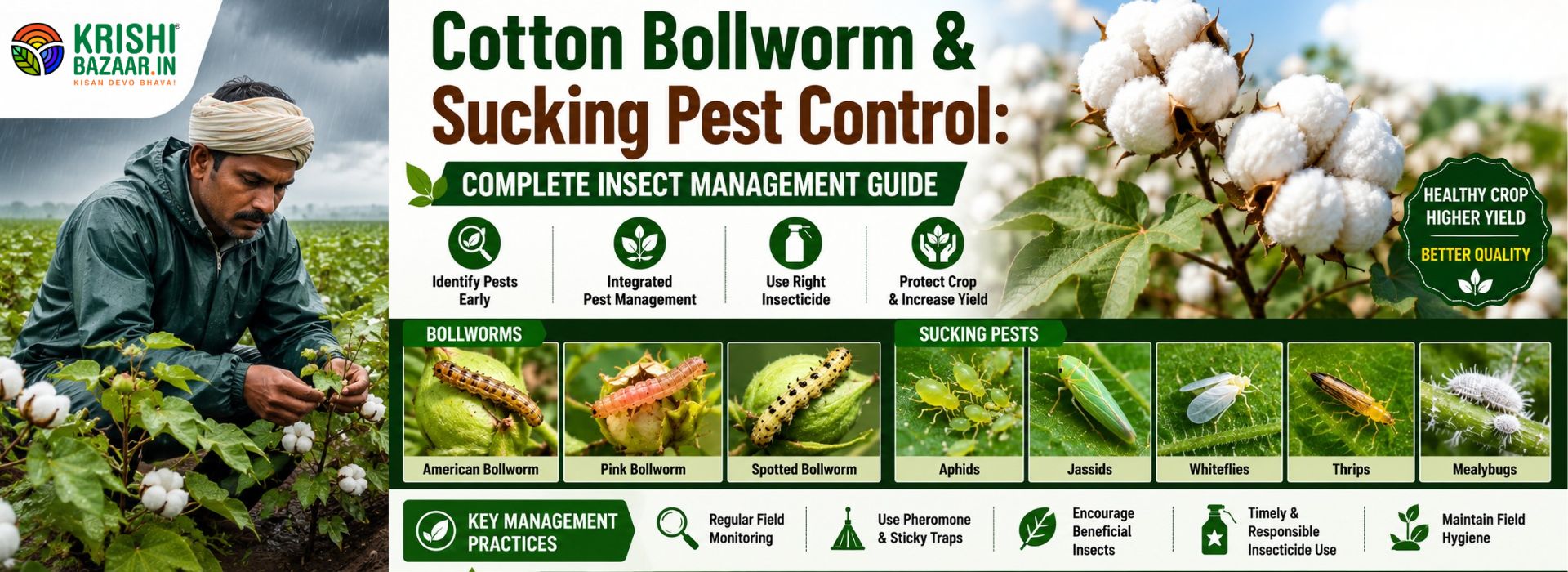
Major Pests in Cotton and Their Management
Cotton is susceptible to several pests.
Pink Bollworm
Symptoms:
- Damaged
bolls
- Reduced
lint quality
Management:
- Use
pheromone traps
- Follow
crop rotation
- Timely
harvesting
Whitefly
Symptoms:
- Yellowing
leaves
- Sooty
mold development
Management:
- Monitor
regularly
- Use
recommended insecticides
- Maintain
field sanitation
Aphids and Jassids
Management:
- Encourage
beneficial insects
- Apply
suitable insecticides when necessary
Integrated Pest Management (IPM) is highly recommended for
sustainable control.
Common Cotton Diseases
Wilt
Symptoms:
- Sudden
plant drying
Management:
- Disease-free
seeds
- Crop
rotation
Leaf Curl Virus
Symptoms:
- Curling
leaves
- Stunted
growth
Management:
- Whitefly
control
- Resistant
varieties
Root Rot
Management:
- Improve
drainage
- Seed
treatment before sowing
Integrated Pest Management (IPM)
IPM helps reduce pesticide dependence while protecting crop
productivity.
Key Components
- Resistant
varieties
- Crop
monitoring
- Pheromone
traps
- Biological
control agents
- Need-based
pesticide application
This approach reduces production costs and environmental
impact.
Harvesting Cotton
Harvesting begins when:
- Bolls
open fully
- Cotton
appears fluffy and dry
Important Tips
- Pick
only mature cotton
- Avoid
moisture contamination
- Separate
damaged cotton
Multiple pickings are usually required for maximum recovery.
Post-Harvest Handling
Proper handling improves market value.
Recommended Practices
- Clean
cotton before storage
- Keep
produce dry
- Store
in ventilated areas
- Avoid
contamination with leaves and debris
Quality preservation directly influences market prices.
How Farmers Can Increase Cotton Profitability
1. Use Certified Seeds
High-quality seeds increase germination and yield.
2. Adopt Soil Testing
Apply nutrients based on soil requirements.
3. Implement Drip Irrigation
Save water and improve nutrient efficiency.
4. Follow Integrated Pest Management
Reduce unnecessary pesticide expenses.
5. Practice Crop Rotation
Maintain soil fertility and reduce pest buildup.
6. Use Quality Agricultural Inputs
Reliable fertilizers and crop protection products improve
crop performance.
7. Monitor Markets
Sell during favorable price periods whenever possible.
Agricultural Inputs Available at Krishibazaar
Farmers can access a wide range of quality agricultural
products through Krishibazaar, including:
- Seeds
- Fertilizers
- Crop
Protection Products
- Plant
Growth Promoters
- Micronutrients
- Agricultural
Equipment
Visit Krishibazaar to explore products that support
profitable cotton farming.
Conclusion
Cotton farming remains a highly profitable agricultural
enterprise when managed scientifically. Selecting quality seeds, maintaining
balanced nutrition, adopting efficient irrigation, and implementing integrated
pest and disease management practices can significantly improve yields and
profitability.
By following modern cotton cultivation techniques and using
quality agricultural inputs, farmers can maximize production while maintaining
long-term soil health and sustainability.
A well-managed cotton crop not only increases farm income but
also contributes to India's thriving textile and agricultural economy.
At krishibazaar.in, you
can find and buy various agricultural products. For agricultural guidance on
selecting the most suitable products for your crops, please contact or WhatsApp
at +917887880887.

Guest reviews
No reviews found for this Blog