

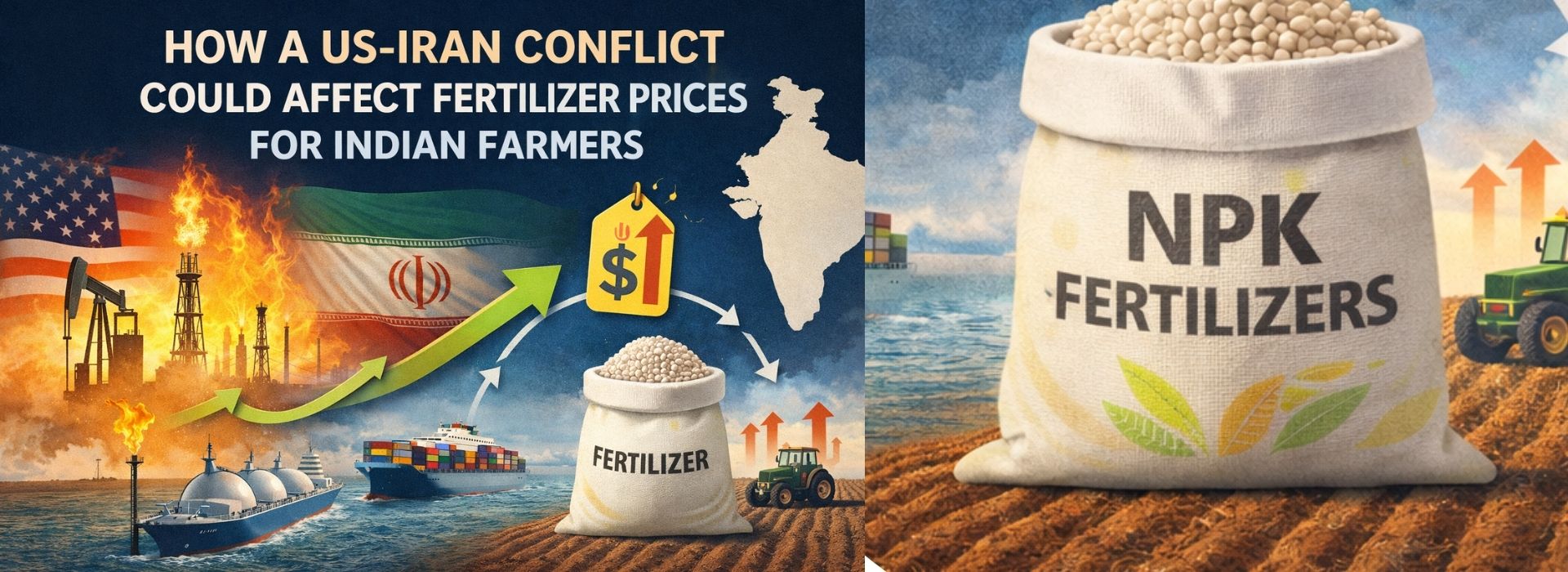
How a US–Iran Conflict Could Affect Fertilizer Prices for Indian Farmers
March 11, 2026🌍 How a US–Iran Conflict Could Affect Fertilizer Prices for
Indian Farmers
Global geopolitical tensions can influence agriculture in
unexpected ways. A potential conflict between the United States and Iran may
seem distant from Indian farms, but it can significantly affect fertilizer
prices and agricultural input costs in India. Since fertilizers are essential
for crop productivity, any disruption in global supply chains can directly
impact farmers’ expenses and food production.
🌾 Why Fertilizers Are Critical for Indian Agriculture
Fertilizers such as urea, DAP (Di-Ammonium Phosphate), and
potash play a crucial role in improving soil fertility and crop yields.
India is one of the largest consumers of fertilizers in the world, and they are
widely used for crops like wheat, rice, sugarcane, and vegetables.
However, India is heavily dependent on imports for several
fertilizer types and raw materials, making the sector vulnerable to
international disruptions.
- India
imports about 30% of its fertilizer requirements from global
markets.
- The
Middle East supplies nearly 40% of these imports along with
important raw materials such as rock phosphate and phosphoric acid.
Because of this dependence, any conflict in the Middle East
region can influence fertilizer availability and price levels in India.
⚡ How a US–Iran Conflict Can Increase Fertilizer Prices
1. Disruption in Natural Gas Supply
Natural gas is the main raw material used to produce ammonia
and urea fertilizers. If tensions escalate in the Gulf region, gas supplies may
be disrupted or become more expensive.
Recent reports show that Middle East conflicts have already
affected liquefied natural gas (LNG) supplies to India, forcing some
fertilizer plants to reduce production.
Higher gas prices directly increase fertilizer production
costs.
2. Rising Crude Oil Prices
Global conflicts often push crude oil prices higher due to
supply uncertainty. Higher oil prices increase:
- Transportation
costs
- Shipping
and logistics charges
- Production
costs for fertilizer plants
As fertilizer production is energy-intensive, rising oil
prices can make fertilizers more expensive globally.
3. Disruptions in Shipping Routes
A large portion of global trade passes through the Strait
of Hormuz, a key maritime route near Iran. If tensions escalate or shipping
slows down in this region:
- Fertilizer
shipments may be delayed
- Freight
costs can increase
- Supply
shortages may occur in importing countries like India
Longer shipping routes and higher insurance costs can further
raise fertilizer prices.
4. Shortage of Key Fertilizer Raw Materials
Many fertilizer ingredients such as:
- Rock
phosphate
- Phosphoric
acid
- Ammonia
- Sulphur
are sourced from Middle Eastern countries.
Any disruption in exports from these regions can reduce
global availability and cause price spikes. In fact, global fertilizer markets
were already tight before recent tensions, and further supply disruptions could
push prices even higher.
5. Impact on Global Fertilizer Markets
Even small disruptions can trigger large price increases in
international commodity markets.
For example:
- Urea
prices have already increased significantly in recent months due to supply
concerns.
- Sulphur
shortages linked to Gulf shipping disruptions have also increased
fertilizer costs globally.
These price changes eventually affect fertilizer import
prices for India.
🚜 What This Means for Indian Farmers
If fertilizer prices increase, farmers may face several
challenges:
Higher cultivation costs
Farmers may need to spend more on fertilizers during sowing
seasons.
Reduced fertilizer usage
Some farmers might reduce fertilizer application to save
costs, which can lower crop yields.
Increased food prices
Higher production costs may eventually lead to higher food
prices for consumers.
🇮🇳 Role of the Indian Government
The Indian government provides fertilizer subsidies to
keep prices affordable for farmers. If global fertilizer prices rise due to
geopolitical tensions:
- The
government may increase subsidy spending
- Imports
may shift to alternative suppliers such as Russia or other countries
- Domestic
fertilizer production may be increased
However, a prolonged conflict could still create temporary
shortages or supply fluctuations.
🌱 How Farmers Can Reduce Risk
To manage rising fertilizer costs, farmers can adopt several
strategies:
- Use
soil testing to apply fertilizers efficiently
- Adopt
organic fertilizers and compost
- Practice
crop rotation and green manuring
- Use
biofertilizers to reduce chemical fertilizer dependence
These practices improve soil health and reduce reliance on
costly inputs.
📊 Conclusion
A potential conflict between the United States and Iran can
have ripple effects far beyond geopolitics. For India, the impact may be felt
strongly in the fertilizer sector due to heavy dependence on imports and
energy-based production.
If the conflict disrupts gas supplies, shipping routes, or
raw material exports, fertilizer prices could rise significantly. While
government subsidies may cushion some of the impact, Indian farmers may still
face higher input costs and uncertainty.
Strengthening domestic fertilizer production and promoting
sustainable farming practices will be key to protecting Indian agriculture from
global shocks.
At krishibazaar.in, you
can find and buy various agricultural products. For agricultural guidance on
selecting the most suitable products for your crops, please contact or WhatsApp
at +917887880887.



Guest reviews
No reviews found for this Blog