

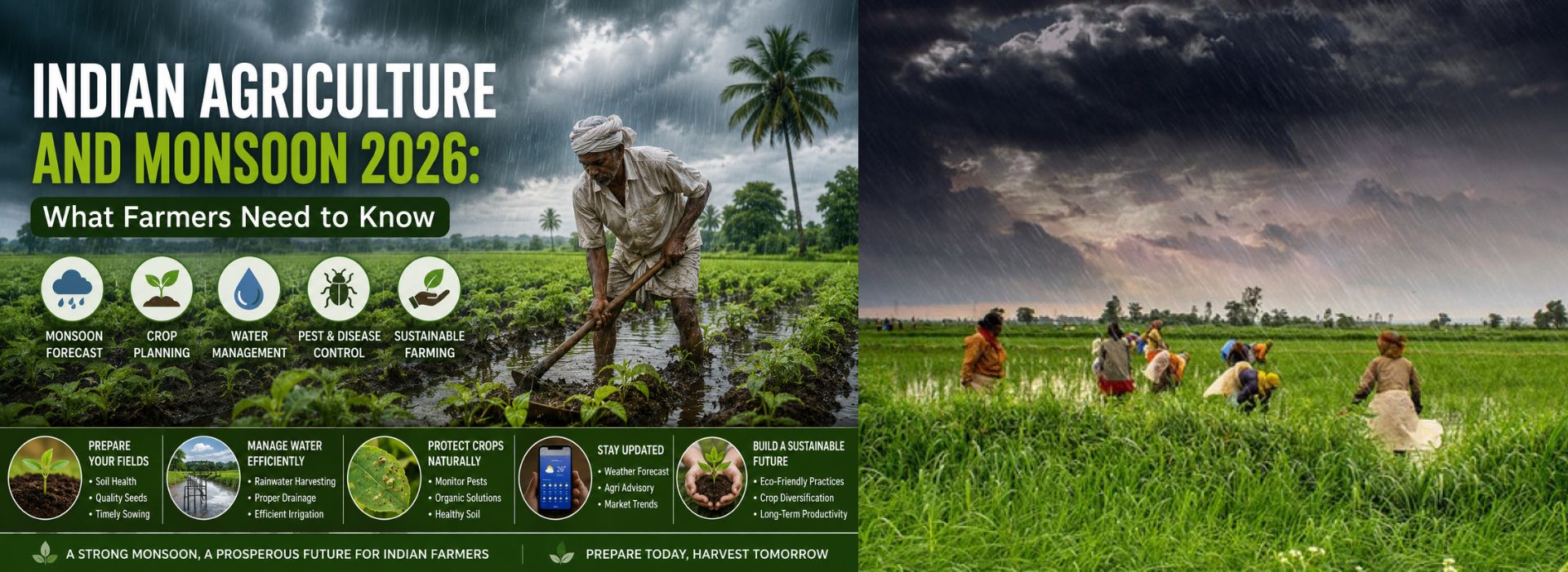
Indian Agriculture and Monsoon 2026: What Farmers Need to Know
May 20, 2026🌧️ Indian Agriculture and Monsoon 2026: What Farmers Need to
Know
The Indian monsoon plays a crucial role in the country’s
agricultural economy. Nearly half of India’s farmland still depends directly on
rainfall, making the monsoon season one of the most important periods for
farmers. As Monsoon 2026 approaches, farmers across India are preparing for
crop planning, water management, and sowing decisions that will impact their
entire farming season.
A good monsoon can boost crop production, improve water
availability, and increase farmer income, while irregular rainfall can create
challenges such as floods, droughts, and pest outbreaks. Understanding the
expected monsoon conditions and preparing in advance can help farmers reduce
risks and improve productivity.
🌾 Why Monsoon Is Important for Indian Agriculture
The southwest monsoon provides nearly 70% of India’s annual
rainfall and supports major agricultural activities across the country.
Monsoon rainfall is essential for:
- Kharif
crop cultivation
- Groundwater
recharge
- Irrigation
reservoirs
- Soil
moisture improvement
- Livestock
and fodder availability
A healthy monsoon season directly affects crop yields, food
prices, and the rural economy.
🌱 Major Crops Dependent on Monsoon
Many important Indian crops rely heavily on monsoon rainfall,
including:
- Rice
- Cotton
- Soybean
- Maize
- Sugarcane
- Pulses
- Groundnut
- Millets
States like Maharashtra, Madhya Pradesh, Gujarat, Karnataka,
and Uttar Pradesh depend significantly on timely rainfall for successful crop
growth.
☔ Expected Monsoon Challenges in 2026
Climate change and changing weather patterns continue to
affect Indian agriculture. Farmers may face several challenges during Monsoon
2026:
🌧️ Irregular Rainfall
Some regions may experience delayed or uneven rainfall
distribution, affecting sowing schedules and crop growth.
🌊 Flooding in Certain Areas
Heavy rainfall can cause waterlogging, root damage, and crop
loss in low-lying agricultural fields.
🌡️ Rising Temperatures
High temperatures before and after rainfall can stress crops
and increase water demand.
🐛 Increased Pest and Disease Attacks
Humid weather during monsoon creates favorable conditions
for:
- Fungal
diseases
- Leaf
spots
- Pest
infestations
- Root
rot problems
🚜 Smart Farming Tips for Monsoon 2026
1. Choose Climate-Resistant Crop Varieties
Farmers should select:
- Drought-tolerant
seeds
- Short-duration
crops
- Disease-resistant
varieties
These varieties help reduce crop failure risks during
unpredictable weather.
💧 2. Improve Water Management
Efficient water management is essential during monsoon
farming.
Recommended practices:
- Drip
irrigation
- Rainwater
harvesting
- Farm
ponds
- Proper
drainage systems
These methods help conserve water and prevent waterlogging.
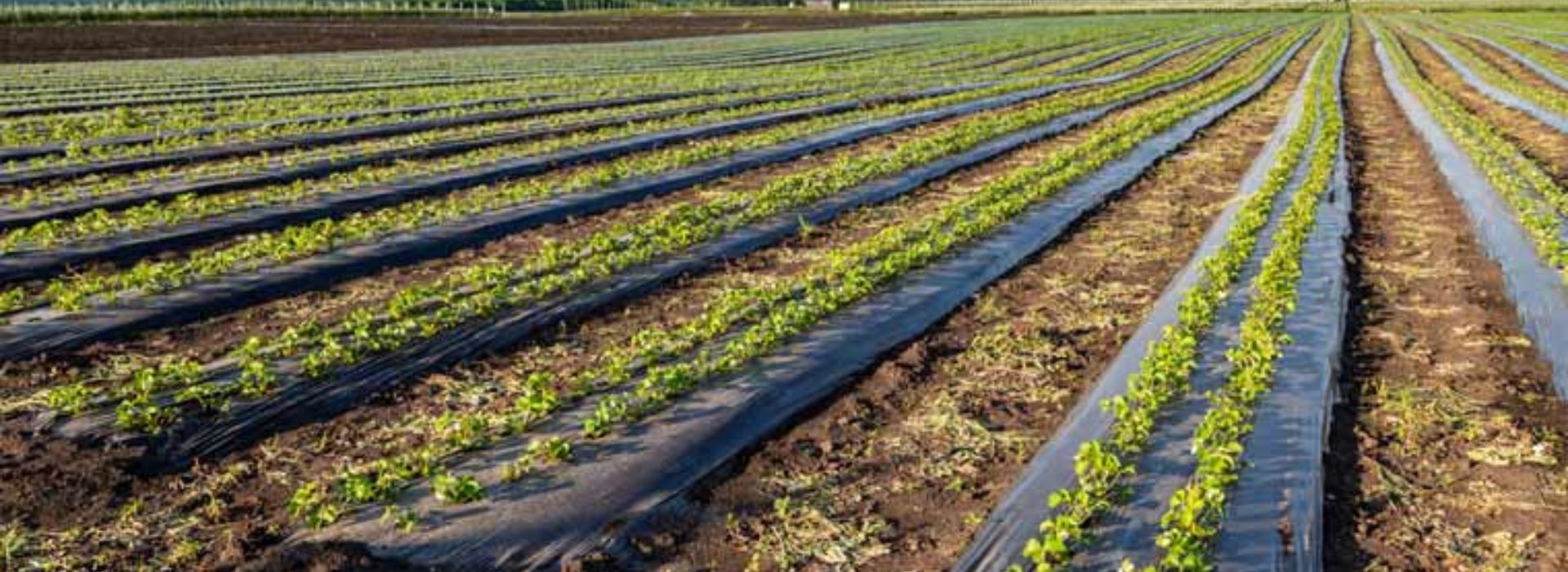
🌿 3. Use Mulching Techniques
Plastic or organic mulching helps:
- Retain
soil moisture
- Control
weeds
- Reduce
soil erosion
- Improve
crop health
Mulching is especially beneficial for vegetable and fruit
crops.
🌱 4. Focus on Soil Health
Healthy soil improves crop resistance against climate stress.
Farmers should:
- Apply
organic manure
- Use
vermicompost
- Conduct
soil testing
- Avoid
excessive chemical fertilizer use
Balanced nutrition supports better crop growth during monsoon
conditions.
🌾 Crop Planning for Monsoon 2026
Proper crop planning can significantly improve productivity
and reduce losses.
Recommended Strategies:
✔
Timely sowing after first effective rainfall
✔ Diversified cropping systems
✔ Intercropping for risk reduction
✔ Use of certified quality seeds
✔ Regular field monitoring
Farmers should stay updated with local weather forecasts and
agricultural advisories.
📱 Technology and Weather Forecasting
Modern technology is helping farmers make better monsoon
decisions.
Useful tools include:
- Weather
forecasting apps
- Automated
irrigation systems
- Satellite-based
crop monitoring
- Mobile
agriculture advisory services
Digital farming solutions can improve crop management and
reduce uncertainty.
🌍 Sustainable Agriculture During Monsoon
Eco-friendly farming practices are becoming increasingly
important due to climate change.
Sustainable methods include:
- Organic
farming
- Integrated
pest management
- Water
conservation
- Crop
rotation
- Natural
soil improvement
These practices help farmers maintain long-term productivity
and environmental balance.
🚜 Government Support for Farmers
Farmers can also benefit from:
- Crop
insurance schemes
- Subsidies
on irrigation systems
- Soil
health card programs
- Agricultural
extension services
Government support programs can reduce financial risk during
unpredictable monsoon seasons.
✅ Conclusion
Monsoon 2026 will play a major role in shaping India’s
agricultural output and farmer livelihoods. While climate uncertainty may
create challenges, farmers who adopt smart farming techniques, efficient water
management, and sustainable agricultural practices can improve resilience and
profitability.
Preparation, proper planning, and use of modern agricultural
technologies will help Indian farmers make the most of the monsoon season and
achieve better crop yields.
At krishibazaar.in, you
can find and buy various agricultural products. For agricultural guidance on
selecting the most suitable products for your crops, please contact or WhatsApp
at +917887880887.


Guest reviews
No reviews found for this Blog