

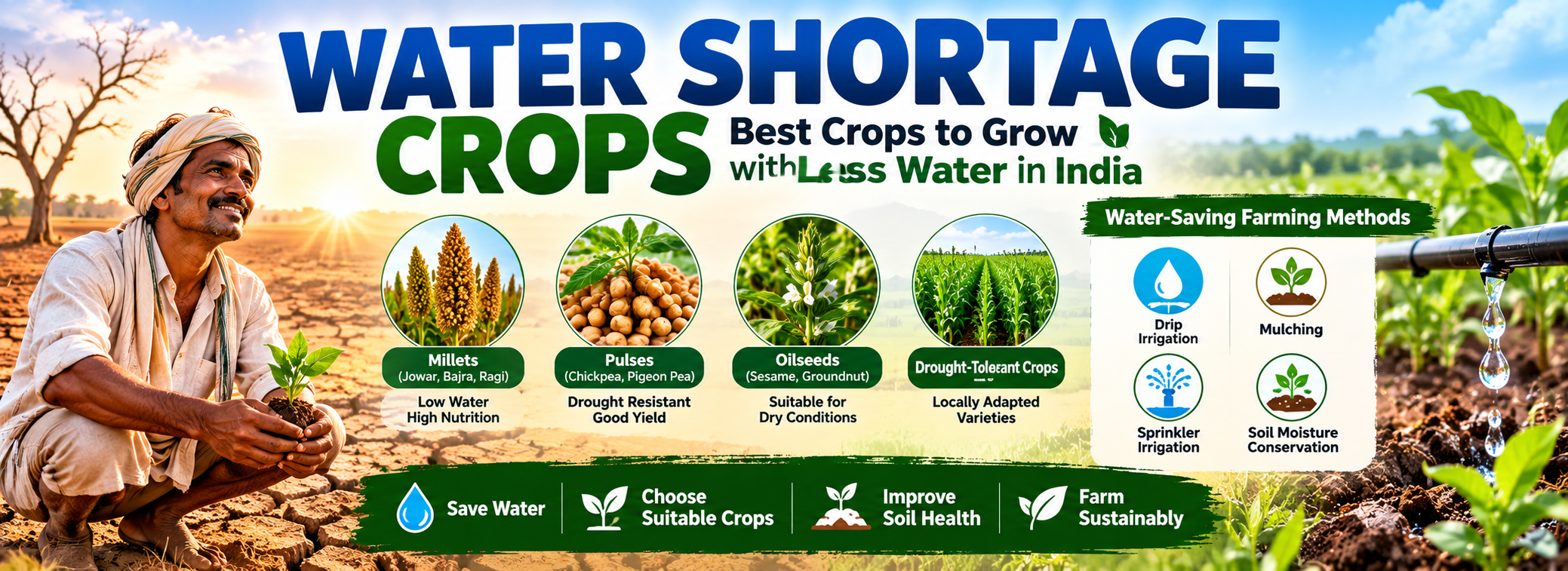
Water Shortage Crops in India: Best Crops for Less Water
October 26, 2026Discover the best water shortage crops in India, including millets, pulses, and drought-resistant crops, with water-saving irrigation tips for farmers.
1. Best Crops to Grow with Less Water
Farmers facing water shortages can consider crops that generally require less water than water-intensive alternatives. Actual water requirements depend on climate, soil type, crop variety, and growing season.
Millets: Sorghum (jowar), pearl millet (bajra), and finger millet (ragi) are suitable options for many dryland farming regions. They can tolerate relatively dry conditions when appropriate varieties and cultivation practices are used.
Pulses: Chickpeas, pigeon peas, and certain varieties of green gram and black gram can be suitable for rainfed farming. Farmers should select varieties according to local rainfall and soil conditions.
Oilseeds: Crops such as sesame and some groundnut varieties can be considered in suitable regions. Successful cultivation still depends on rainfall distribution and soil moisture availability.
Other drought-tolerant crops: Some locally adapted varieties of sorghum and pearl millet can perform well under limited-water conditions. Farmers should consult local agricultural experts before selecting seeds.
2. Water-Saving Irrigation Methods
Efficient irrigation helps farmers reduce water wastage and maintain suitable soil moisture.
Drip irrigation: Delivers water close to plant roots and is particularly useful for many fruit, vegetable, and commercial crops.
Mulching: Covering the soil with suitable organic or other agricultural mulch can reduce evaporation and help conserve moisture.
Sprinkler irrigation: Can improve water distribution for suitable crops and field conditions.
Irrigation scheduling: Water crops according to their growth stage, soil moisture, and weather conditions instead of following a fixed schedule without considering crop needs.
Farmers should select irrigation methods based on their crop, available water supply, installation costs, and local conditions.
3. Improve Soil Moisture Retention
Healthy soil plays an important role in water conservation. Adding suitable organic matter, maintaining soil cover, and controlling erosion can improve soil structure and moisture retention.
Farmers can also consider contour bunding, farm ponds, and rainwater harvesting where appropriate. These practices can help capture rainfall and reduce runoff.
Soil testing is useful for understanding soil conditions and making informed nutrient-management decisions. Balanced fertilizer application supports crop growth, but fertilizers cannot replace the need for adequate water.
4. Choose Crops According to Local Conditions
There is no single crop that is best for every water-shortage area. Farmers should consider annual rainfall, groundwater availability, soil type, market demand, and the length of the growing season.
In drought-prone regions, diversifying crops and choosing locally recommended varieties can reduce dependence on water-intensive crops. Agricultural universities and extension officers can provide guidance on suitable crops and sowing periods.
5. Conclusion
Water shortage requires careful planning and responsible use of agricultural resources. Growing millets, pulses, and suitable oilseeds, adopting efficient irrigation, conserving soil moisture, and selecting locally adapted crop varieties can help farmers manage dry conditions.
Visit Krishibazaar.in for agricultural information, fertilizer guidance, crop management tips, and farming resources that support informed decisions.
Save Water. Choose Suitable Crops. Farm Sustainably.
Disclaimer: Crop suitability and water requirements vary by location. Consult local agricultural experts for recommendations based on your soil, climate, and water availability.

Guest reviews
No reviews found for this Blog