

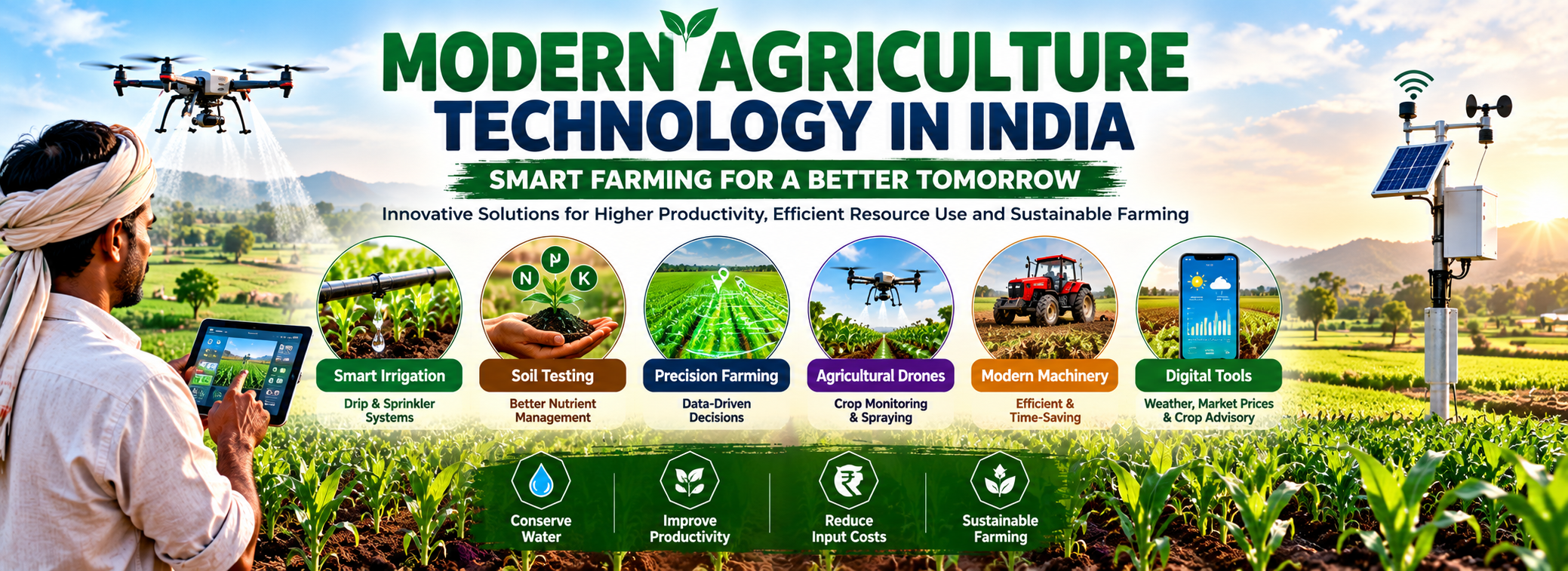
Modern Agriculture Technology in India
October 28, 2026Discover modern agriculture technology in India, including smart irrigation, drones, soil testing, precision farming, and digital tools for farmers.
1. What Is Modern Agriculture Technology?
Modern agriculture technology refers to tools, equipment, and scientific methods used to manage farming activities more efficiently. These technologies can help farmers monitor crops, manage water, apply nutrients appropriately, and reduce avoidable input costs.
Examples include precision farming, automated irrigation systems, farm machinery, weather forecasting applications, and digital agricultural marketplaces.
The right technology depends on the crop, farm size, local climate, available resources, and investment budget.
2. Smart Irrigation and Water Management
Water management is a major concern for farmers in regions affected by irregular rainfall and water shortages.
Drip irrigation delivers water close to plant roots through a network of pipes and emitters. When properly designed and maintained, it can reduce water losses and improve irrigation efficiency.
Sprinkler irrigation is another option for suitable crops and field conditions. Soil moisture monitoring and weather forecasts can also help farmers decide when irrigation is needed.
Farmers should choose irrigation systems according to crop requirements, soil type, water availability, and installation costs.
3. Soil Testing and Precision Farming
Soil testing helps farmers understand nutrient levels and important soil properties. Based on test results, they can make better decisions about fertilizer selection and application rates.
Precision farming uses information such as soil conditions, crop growth, weather data, and field variability to manage farm inputs more accurately.
These methods can help reduce unnecessary fertilizer use and support balanced crop nutrition. Farmers should follow soil test recommendations and product-label instructions rather than applying fertilizers without assessing crop requirements.
4. Agricultural Drones and Modern Machinery
Agricultural drones can be used for activities such as crop monitoring, field mapping, and certain spraying applications where permitted and appropriate.
Drone-based imagery may help identify differences in crop growth or areas requiring further inspection. However, the results need proper interpretation and do not replace field inspections or expert diagnosis.
Modern machinery, including seed drills, planters, and harvesting equipment, can improve operational efficiency and reduce labour requirements when selected for suitable farming conditions.
Farmers should consider equipment costs, maintenance, operator training, and applicable regulations before investing.
5. Digital Tools for Farmers
Digital technology makes agricultural information easier to access. Farmers can use mobile applications and online platforms to check weather forecasts, market prices, crop advisories, and government scheme information.
Online agricultural marketplaces can also help users discover farming inputs and compare available products.
Before relying on digital information, farmers should verify important announcements through official sources and consult local agricultural experts for crop-specific recommendations.
6. Benefits of Modern Agriculture Technology
Adopting suitable agricultural technology can offer several benefits:
Better irrigation and water management.
More informed fertilizer and nutrient decisions.
Improved monitoring of crop growth and field conditions.
Reduced avoidable labour and input costs in suitable situations.
Better access to agricultural information and market resources.
Support for sustainable farming practices.
Technology does not guarantee higher yields or profits. Results depend on correct implementation, weather, soil conditions, crop selection, and market prices.
Conclusion
Modern agriculture technology in India is creating new opportunities for farmers to manage water, monitor crops, improve nutrient management, and make informed farming decisions.
Starting with practical steps such as soil testing, efficient irrigation, and reliable digital advisories can help farmers adopt technology gradually.
Visit Krishibazaar.in for agricultural products, fertilizer information, crop nutrition guidance, and useful farming resources.

Guest reviews
No reviews found for this Blog