

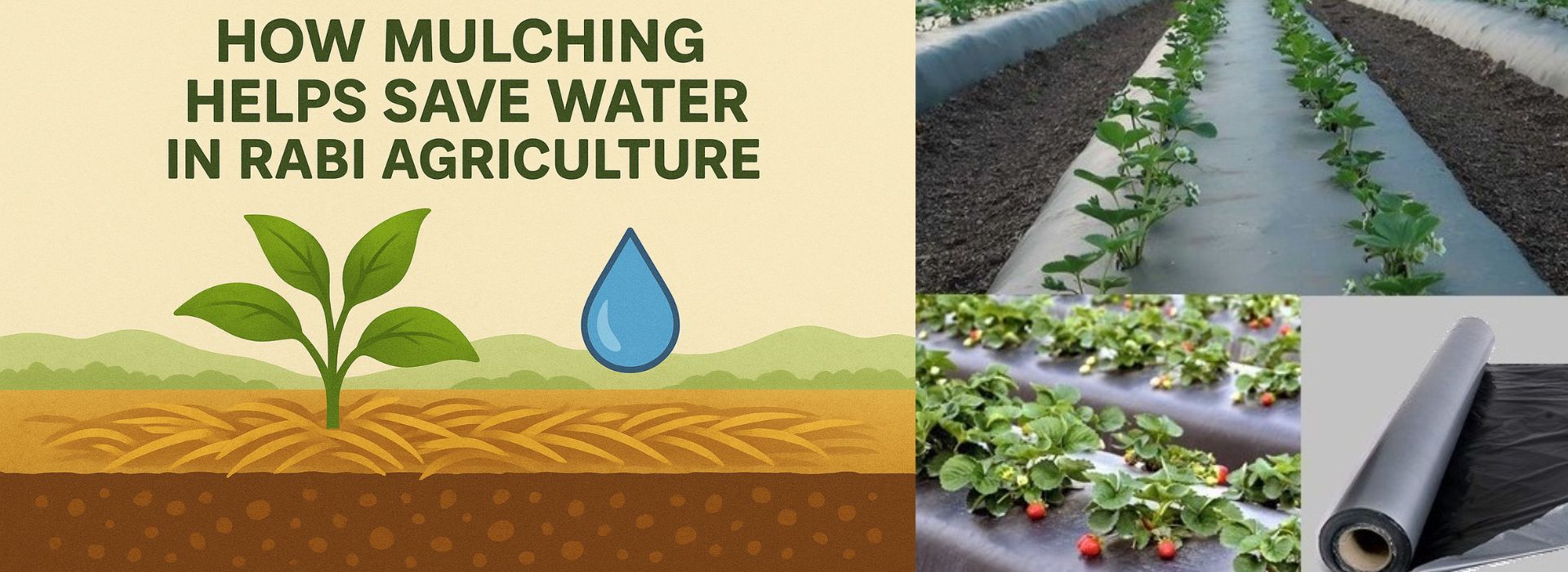
How Mulching Helps Save Water in Rabi Agriculture
November 24, 2025🌾 How Mulching Helps Save
Water in Rabi Agriculture
Smart Moisture Management for
Sustainable Winter Farming
Introduction
Rabi season farming in India
depends heavily on irrigation, as crops like wheat, mustard, gram, and
vegetables grow during the dry winter months. With rising water scarcity,
declining groundwater levels, and unpredictable rainfall patterns, farmers need
effective ways to save and utilize water efficiently.
One simple, low-cost, and highly beneficial technique is mulching —
covering the soil surface with plant residues or synthetic materials to
conserve moisture.
🌱 What Is Mulching?
Mulching refers to applying a
protective covering over the soil using:
Organic Mulch:
- Straw
- Crop residues
- Leaves
- Sugarcane trash
- Dry grass
- Compost
Inorganic Mulch:
- Plastic films (black/silver)
- Biodegradable sheets
Mulching is widely used in
horticulture — but in recent years, it has also proven extremely effective for Rabi
crops, especially in water-deficit regions.
💧 How Mulching Helps Save
Water in Rabi Agriculture
1. Reduces Evaporation Loss by
Up to 50%
Bare soil loses huge amounts of
moisture to sunlight and wind.
Mulch acts as a barrier, preventing direct exposure of moist soil to heat.
Result:
- Less frequent irrigation
- Better moisture retention
- Crop roots stay hydrated longer
2. Improves Soil Temperature
Regulation
Rabi crops grow in cooler
temperatures. Mulch:
- Protects the soil from extreme cold
- Maintains a uniform temperature
- Supports healthy root development
Stable soil temperature improves irrigation
efficiency and prevents stress during cold waves.
3. Enhances Water Infiltration
& Reduces Runoff
Mulching softens the impact of
irrigation water and prevents crust formation.
This ensures:
- Water enters the soil easily
- Less wastage due to runoff
- Moisture reaches deeper root layers
This is valuable for crops like wheat,
mustard, and gram.
4. Reduces Weed Growth (Major
Water Competitors)
Weeds consume a significant
portion of soil nutrients and moisture.
Mulch blocks sunlight, suppressing weed germination.
Benefits:
- More water available for main crops
- Lower weeding costs
- Higher crop yields
5. Prevents Soil Erosion and
Moisture Loss from Wind
Winter winds in north and central
India cause rapid evaporation.
Mulch holds the soil together, protecting:
- Topsoil
- Soil moisture
- Microorganism activity
This is especially helpful for
sandy soils prone to drying.
6. Improves Soil Organic
Matter (With Organic Mulch)
As organic mulch decomposes, it
adds natural humus to the soil, enhancing:
- Water-holding capacity
- Soil structure
- Microbial health
This results in long-term
moisture retention and improved soil fertility.
7. Supports Micro-Irrigation
Systems
Mulching + Drip irrigation =
🌟
Maximum water savings
🌟
Controlled moisture levels
🌟
Healthy crop growth
Plastic or organic mulch reduces
surface evaporation in drip-irrigated Rabi crops like:
- Potato
- Tomato
- Onion
- Cabbage
- Mustard
🌿 Best Mulch Materials
for Rabi Farming in India
Organic mulch (most
affordable):
- Wheat straw
- Paddy straw
- Mustard stalks
- Sugarcane leaves
- Dry grasses
- Cotton residues
Plastic mulch:
- Black mulch (controls weeds)
- Silver mulch (reflects light, good for vegetables)
Farmers choose based on crop
type, cost, and availability.
🌾 Rabi Crops That Benefit
Most from Mulching
✔ Wheat
✔ Mustard
✔ Gram (Chana)
✔ Potato
✔ Onion/Garlic
✔ Tomato
✔ Peas
✔ Winter vegetables
📉 How Much Water Can
Farmers Save?
Studies show:
- Organic mulch can save 25–40% irrigation water
- Plastic mulch can save up to 50% water
- Reduces irrigation frequency significantly
This is a game-changer for
drought-prone regions like Rajasthan, Gujarat, Bundelkhand, and Maharashtra.
⭐ Conclusion
Mulching is one of the simplest
and most effective techniques to save water in Rabi agriculture. By reducing
evaporation, suppressing weeds, and improving soil health, mulching helps
farmers achieve:
- Higher yields
- Lower irrigation costs
- Better soil sustainability
- Improved resilience against climate stress
With India’s growing water
challenges, adopting mulching can be a powerful step toward sustainable
winter farming.
At krishibazaar.in, you can find and buy various agricultural products. For agricultural guidance on selecting the most suitable products for your crops, please contact or WhatsApp at +917887880887.


Guest reviews
No reviews found for this Blog