

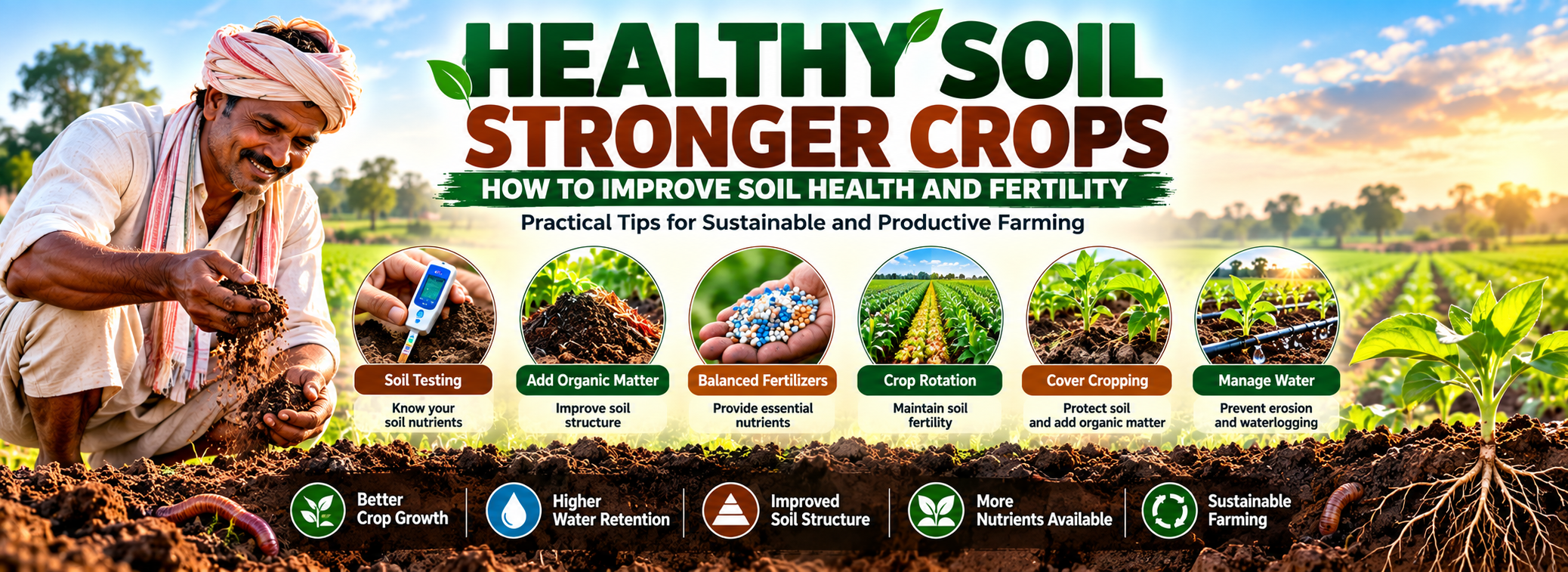
How to Improve Soil Health and Fertility
October 29, 2026Learn how to improve soil health and fertility with soil testing, organic matter, balanced fertilizers, crop rotation, and sustainable farming practices.
1. Understand Your Soil Through Soil Testing
Soil testing is one of the most important steps in improving soil health. It helps identify soil pH, nutrient availability, and other properties that influence crop growth.
A soil test can help farmers determine whether their fields require specific nutrients and guide appropriate fertilizer application.
Farmers should collect soil samples according to recommended sampling procedures and use a reliable soil testing laboratory. Testing should be repeated as advised by local agricultural experts, particularly when crop conditions or nutrient management practices change.
Avoid applying fertilizers without considering soil test results, crop requirements, and local recommendations.
2. Add Organic Matter to Improve Soil Structure
Organic matter helps improve soil structure, water retention, and the activity of beneficial soil organisms.
Farmers can consider using well-decomposed farmyard manure, suitable compost, or other locally available organic materials. Crop residues can also be retained or incorporated where appropriate.
Organic amendments should be properly prepared and applied according to crop needs. Their nutrient content varies, so they may not supply all the nutrients required for high-yielding crops.
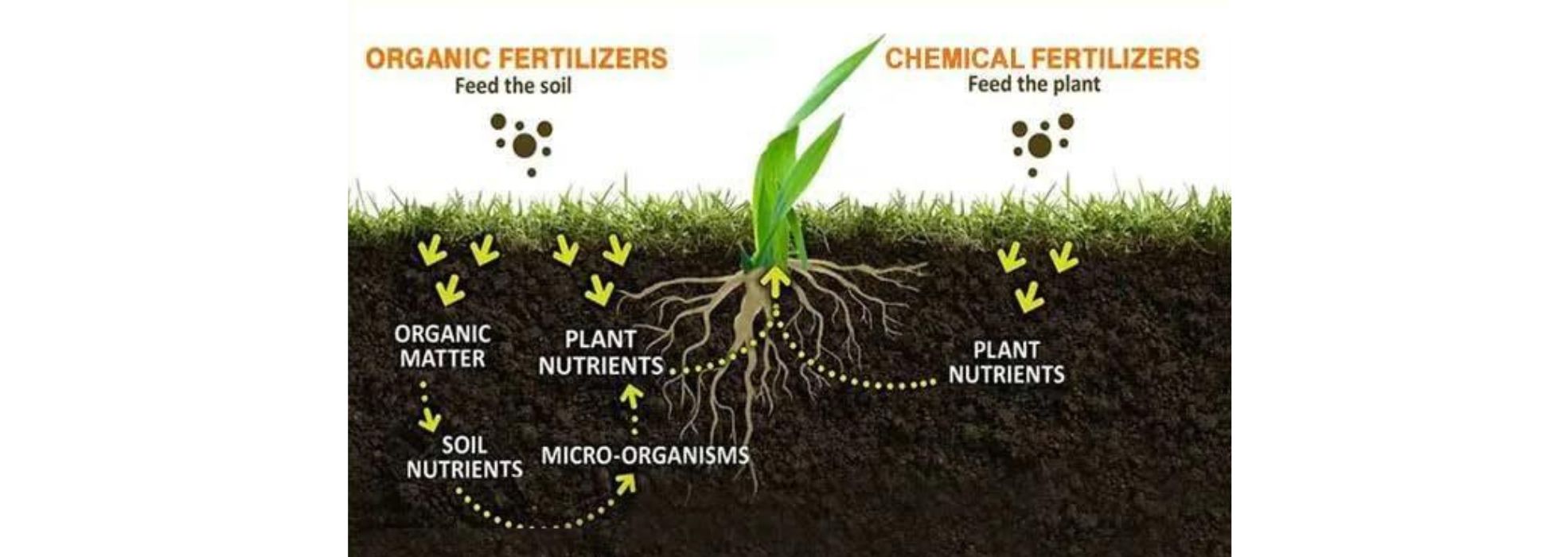
Combining organic matter management with balanced fertilizer use can support long-term soil fertility.
3. Use Fertilizers in a Balanced Way
Plants require essential nutrients, including nitrogen, phosphorus, and potassium, for healthy growth. Different crops require different nutrient combinations and application rates.
Excessive or unbalanced fertilizer application can increase production costs and contribute to nutrient losses and environmental problems.
To improve fertilizer management:
Follow soil test recommendations.
Select fertilizers according to crop nutrient requirements.
Apply nutrients at the recommended growth stages.
Follow product-label instructions and recommended dosages.
Use micronutrients when deficiencies are identified or their application is recommended.
Krishibazaar.in can help farmers explore fertilizer products and access useful crop nutrition information.
4. Practise Crop Rotation and Cover Cropping
Growing the same crop repeatedly can increase certain pest and disease problems and contribute to nutrient imbalances.
Crop rotation involves growing different crops in sequence. Including suitable legumes, such as green gram or chickpea, can contribute to soil nitrogen when biological nitrogen fixation occurs. The benefits depend on the crop, soil conditions, and how residues are managed.
Cover crops can protect the soil surface, reduce erosion, and add organic matter. Farmers should select suitable species according to local climate, available water, and the main crop's planting schedule.
5. Prevent Soil Erosion and Manage Water
Soil erosion removes valuable topsoil and can reduce long-term agricultural productivity. Farmers can reduce erosion by maintaining soil cover, using contour farming where suitable, and establishing vegetative barriers in vulnerable areas.
Efficient irrigation also supports soil management. Over-irrigation can cause waterlogging and, in some conditions, contribute to salt accumulation. Drip irrigation may help manage water efficiently for suitable crops, while proper drainage remains important.
6. Monitor Soil Health Regularly
Improving soil health requires consistent monitoring rather than a single treatment. Farmers should observe crop growth, review soil test results, manage residues responsibly, and adjust nutrient applications according to recommendations.
Local agricultural universities, extension officers, and soil testing laboratories can provide guidance based on regional conditions.
Conclusion
Healthy soil supports better crop growth, efficient nutrient use, and sustainable agriculture. Soil testing, organic matter management, balanced fertilizer
application, crop rotation, erosion control, and proper water management are practical steps farmers can take to improve soil health.


Guest reviews
No reviews found for this Blog